Toddler Sleep Schedules (1–3 Years)
Nap-to-no-nap timing, bedtime routines, and how much sleep toddlers need.
By Jordan Brooks · Certified pediatric sleep consultant
Updated June 11, 2026

How Much Sleep a Toddler Actually Needs
The evidence-based number to anchor on is the 24-hour total. The American Academy of Sleep Medicine, in guidance the American Academy of Pediatrics endorses, puts children aged 1-2 years at roughly 11-14 hours of sleep per 24 hours, and children 3-5 years at about 10-13 hours, both figures including naps. For most toddlers that breaks down to 10-12 hours overnight plus one daytime nap. Unlike the newborn months, toddler sleep is consolidated: the bulk happens in one long night stretch, with a single predictable nap anchoring the middle of the day. If your child is hitting the total, waking happy, and growing well, you do not need to chase a particular schedule off the internet.
What changes most across the toddler years is not the total so much as how it is distributed. Naps shrink and eventually disappear, nights lengthen to absorb that lost day sleep, and the awake stretch before bedtime grows to five or six hours. Watching the total, rather than fixating on nap length, is the single most useful habit for these years.
The Two-Nap to One-Nap Transition (12-18 months)
Most children drop their morning nap and move to a single midday nap between 15 and 18 months, though some start as early as 12 months. The signs are consistent: your toddler fights the morning nap, takes a long time to fall asleep at one or both naps, or starts waking earlier in the morning or resisting bedtime because too much of the day's sleep is happening too early. The transition is rarely clean. For a few weeks children sit in an awkward middle zone where one nap is too little and two is too much.
The practical method is to flex day by day rather than switching cold turkey. On two-nap days, keep the old rhythm; on one-nap days, push the single nap toward midday (aim for around 12:00-12:30) and protect against overtiredness by bringing bedtime earlier, sometimes as early as 6:00-6:30 pm. Over a few weeks the one-nap day wins out. A reliable midday nap of 1.5 to 2.5 hours, started around noon, is the target you are steering toward.
Sample Toddler Schedules by Age
A one-nap day for an 18-month-old to 2-year-old often looks like this: wake 6:30-7:00, lunch around 11:30, nap from roughly 12:30 to 2:30, then a long afternoon-to-bedtime window with the wind-down beginning around 6:45 and lights-out by 7:30-8:00. The first wake window of the morning is the shortest and the final one before bed is the longest, by design; building the day around that asymmetry makes both the nap and bedtime fall into place.
A 2.5-to-3-year-old who still naps follows the same skeleton with a slightly shorter or later nap, often 1:00 to 2:30. Once the nap starts pushing bedtime past 8:30 or causing long bedtime battles, that is usually the cue the nap itself is on the way out. The fix at that point is not a later bedtime but a shorter (capped) nap or, eventually, quiet rest time in its place.
Dropping the Last Nap (3-4 years)
Most children give up the nap entirely between 3 and 4 years, though the normal range stretches from about 2.5 to 5. The tell is that on nap days bedtime becomes a drawn-out fight and your child clearly is not tired at the usual hour, while on no-nap days bedtime is easy but the late afternoon brings meltdowns. A smooth way through is to replace the nap with a daily 'quiet time': 45-60 minutes alone in the room with books or calm toys. It protects the parent's break and gives a tired child the option to sleep on the days they still need it.
When the nap goes, move bedtime earlier to compensate. A 3-year-old who has just dropped the nap often needs a 6:30-7:00 pm bedtime for a while, because the whole day's sleep now has to fit into the night. Expect to slide back to a later bedtime gradually as they adjust.
Bedtime Routines and Handling Stalling
A short, identical-every-night routine is the most powerful sleep tool you have at this age, because toddlers run on predictability. Twenty to thirty minutes is plenty: bath or wash-up, pajamas and teeth, two or three books, a song, lights out. Keep the order the same so each step signals the next, and finish in the room where your child sleeps. The routine works precisely because it is boring and reliable, not because it is elaborate.
Stalling and 'curtain calls' (one more drink, one more story, one more hug) are developmentally normal as toddlers test boundaries and discover they can summon you. The fix is a warm, consistent boundary, not a battle. Front-load the requests into the routine (the last drink and last potty trip happen before lights-out), then keep returns brief, boring, and predictable. Tools like a clear 'two books, then sleep' rule, a comfort object, or a toddler-friendly OK-to-wake clock for older toddlers give the child a sense of control inside limits you set. Consistency over a week or two extinguishes stalling far more effectively than negotiating in the moment.
The Crib-to-Bed Transition and Toddler Sleep Safety
Keep your child in the crib as long as it is safe, which for most families is until close to age 3. The two triggers to switch are climbing out (a fall risk) or reaching roughly 35 inches / 89 cm tall, when the crib rail no longer comes up high enough. There is rarely a benefit to moving a toddler to a bed early; an earlier move usually means more bedtime wandering, not better sleep. If a new sibling needs the crib, try to make the switch a couple of months before the baby arrives so it is not tangled up with that adjustment.
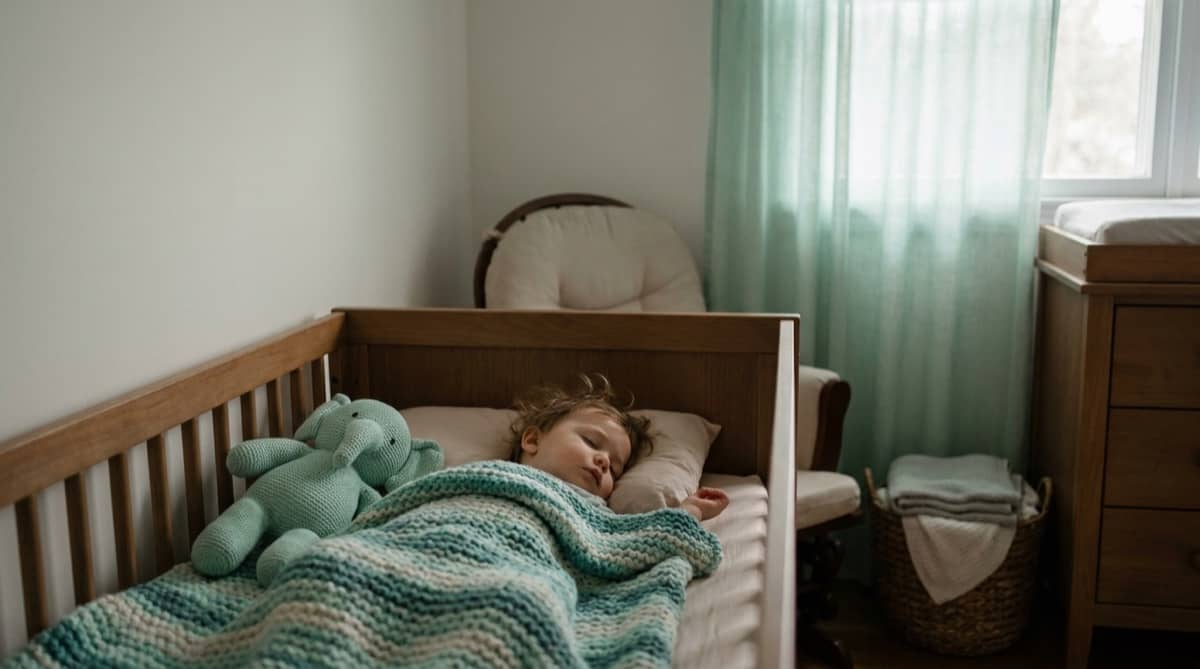
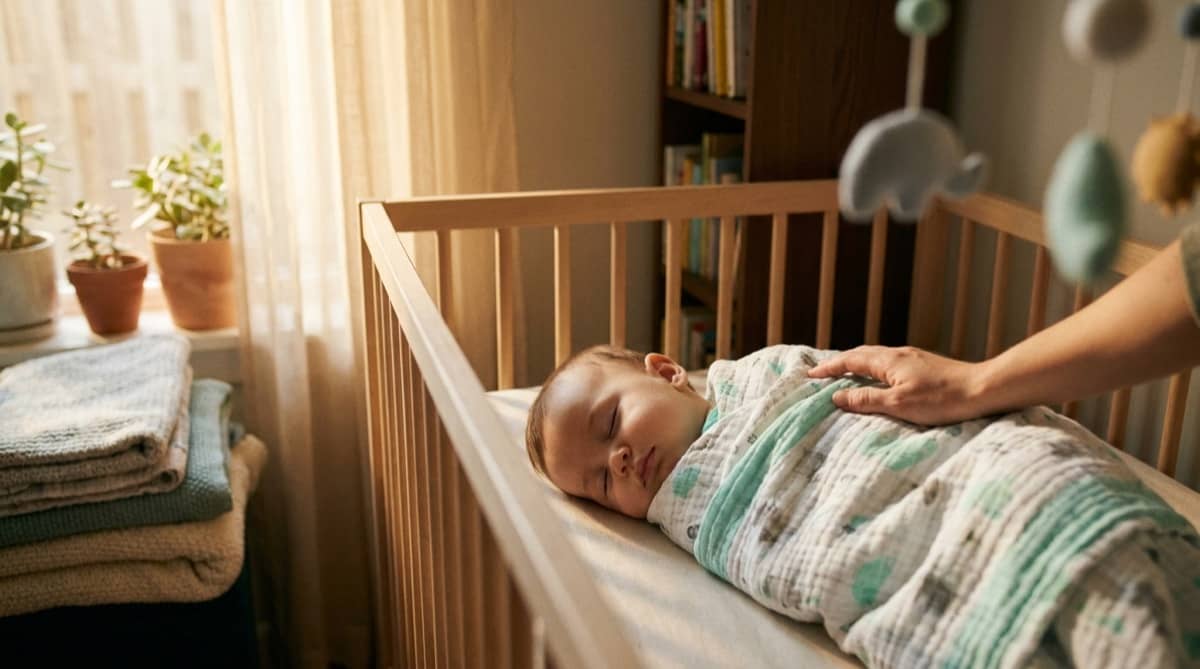
Toddler sleep safety is different from infant safe-sleep. The strict 'bare crib, on the back, nothing inside' rules apply to babies under 12 months to reduce SIDS risk; they are not the toddler standard. After the first birthday a small pillow, a blanket, and a comfort object are generally fine and can help a toddler settle. What matters now is the room: lower the crib mattress to its bottom setting, anchor dressers and bookshelves to the wall to prevent tip-overs, keep blind and curtain cords well out of reach, use outlet covers, and once your child is in a bed, consider a baby gate at the door or top of the stairs. The hazards shift from suffocation risk to the hazards of a mobile, curious climber.
Common Toddler Sleep Problems
Early-morning waking (before 6:00) is the most common complaint, and the usual culprits are a bedtime that is too late (causing overtiredness), a nap that runs too long or too late, or light and noise leaking into the room at dawn. Counterintuitively, an earlier bedtime and a blackout-dark room often push the wake time later. Night wakings and bedtime resistance frequently cluster around the well-documented regressions near 18 months and 2 years, which are driven by developmental leaps, separation awareness, and boundary-testing rather than a scheduling error; hold your routine and boundaries steady and they pass.
Two things parents often confuse are nightmares and night terrors. Nightmares happen in the second half of the night, the child wakes fully, is scared, and wants comfort, and may remember the dream. Night terrors happen in the first few hours, the child appears terrified, may scream or thrash with eyes open, but is actually still asleep and has no memory of it afterward. For night terrors the guidance is to keep the child safe and wait it out rather than wake them; they are harmless and usually outgrown. Persistent loud snoring, long breathing pauses, or excessive daytime sleepiness are different and worth raising with your pediatrician, as they can signal a treatable sleep-disordered-breathing problem.
The Bottom Line
Aim for 11-14 hours of total sleep across the toddler years, anchored by one reliable midday nap that fades sometime between 3 and 4. Expect two predictable transitions (two naps to one around 15-18 months, and the loss of the last nap around 3-4) and ride them by flexing the schedule and leaning on an early bedtime. A short, consistent wind-down and calm, repeated boundaries solve the great majority of stalling and night wakings. This is general guidance, not medical advice; if sleep problems are severe, persistent, or paired with snoring or breathing pauses, talk with your pediatrician.
Was this article helpful?
Frequently asked questions
How much sleep does a toddler need?
Children aged 1-2 years need about 11-14 hours of sleep per 24 hours, and children 3-5 years about 10-13 hours, both including naps, per American Academy of Sleep Medicine ranges that the AAP endorses. For most toddlers that means roughly 10-12 hours overnight plus one daytime nap. Use your child's mood, energy, and growth as the real test rather than hitting an exact number.
When do toddlers drop to one nap?
Most children move from two naps to one between 15 and 18 months, though some start at 12 months. Signs include fighting the morning nap, taking a long time to fall asleep, or waking earlier. Transition gradually by alternating one- and two-nap days, pushing the single nap toward midday, and using an early bedtime to cover the gap until the one-nap day settles in.
When should I move my toddler from a crib to a bed?
Wait as long as it is safe, which for most families is close to age 3. Switch when your child climbs out of the crib (a fall risk) or reaches about 35 inches / 89 cm tall. Moving too early usually leads to more bedtime wandering, not better sleep. When you do switch, anchor furniture to the wall and consider a baby gate, because a toddler in a bed can get up and roam.
Is it safe for a toddler to sleep with a pillow and blanket?
Yes, after the first birthday. The strict bare-crib, back-only safe-sleep rules are for babies under 12 months to reduce SIDS risk and are not the toddler standard. From age 1 a small pillow, a blanket, and a comfort object are generally fine and can help a toddler settle. The bigger safety focus for toddlers is the room: anchored furniture, a low crib mattress, and cords kept out of reach.
How do I stop toddler bedtime stalling and curtain calls?
Build the requests into the routine so the last drink, last potty trip, and last story all happen before lights-out, then keep any returns brief, calm, and boring. A clear rule like 'two books, then sleep,' a comfort object, and for older toddlers an OK-to-wake clock give your child a sense of control within firm limits. Consistency over a week or two extinguishes stalling far better than negotiating each night.
Why does my toddler wake up so early?
The usual causes are a bedtime that is too late (overtiredness backfires into early waking), a nap that runs too long or too late in the day, or light and noise at dawn. Try a blackout-dark room, white noise, and an earlier bedtime, and cap a runaway nap. For older toddlers an OK-to-wake clock that signals when it is time to get up can help shift the morning later.
References
- 1.Healthy Sleep Habits: How Many Hours Does Your Child Need? — American Academy of Pediatrics
- 2.Sleep - HealthyChildren.org — American Academy of Pediatrics
- 3.Recommended Amount of Sleep for Pediatric Populations (AASM Consensus Statement) — American Academy of Sleep Medicine