Safe Sleep: Reducing SIDS Risk
Evidence-based safe-sleep practices every parent should know.
By Dana Reyes · CPST-certified car seat & safety editor
Updated June 11, 2026
Sudden infant death syndrome (SIDS) is the unexplained death of a baby under one year, and while it cannot be predicted, decades of research show that a small set of habits dramatically lower the risk. Since the "Back to Sleep" campaign began in the 1990s, SIDS rates have fallen by more than half. This guide distills the current AAP safe-sleep guidance — reviewed by our medical reviewer — into what actually moves the needle, and clears up the myths that cause well-meaning parents to take on hidden risk.
The ABCs of safe sleep
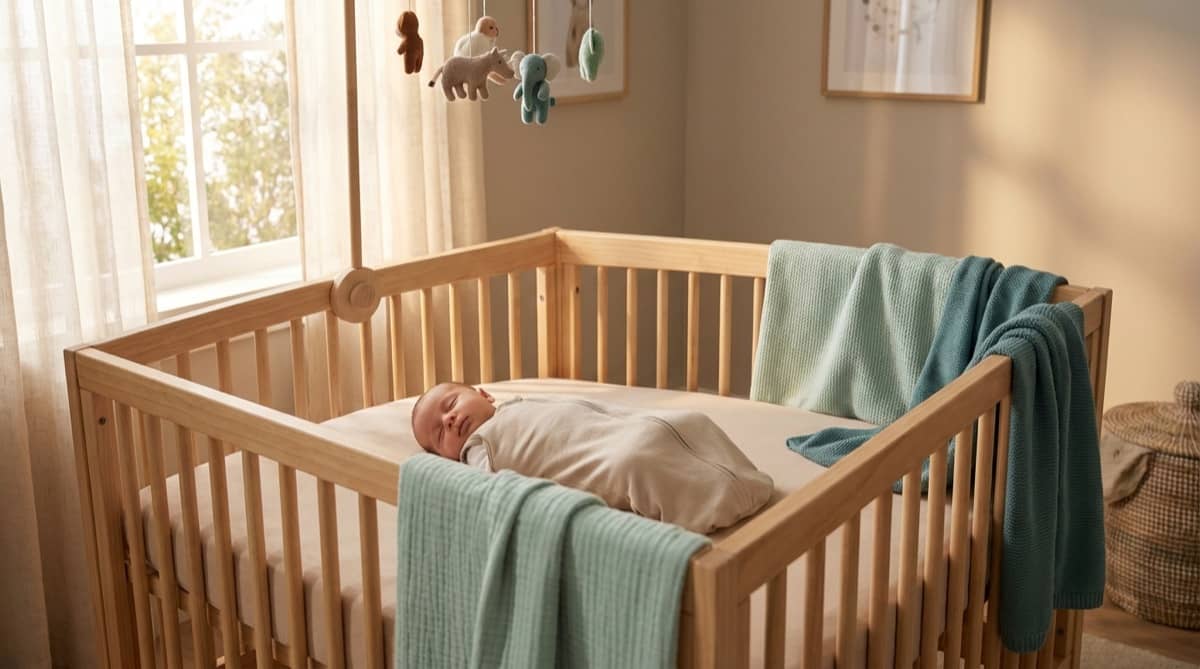
Every safe-sleep recommendation collapses into three letters. Alone: baby sleeps on their own surface, with nothing else in it. Back: baby is placed flat on their back for every sleep. Crib: baby sleeps on a firm, flat, safety-approved surface — a crib, bassinet, or play yard — with a tight-fitting sheet and nothing else. If you remember nothing else, remember A-B-C, every nap, every night.
Why back-sleeping matters most
Back-sleeping is the most protective single factor. A common fear is choking, but in healthy babies the airway is built so that back-sleeping actually lowers choking risk — the trachea sits above the esophagus, so spit-up drains away from the airway. Stomach- and side-sleeping both raise SIDS risk and should be avoided. Once your baby can roll both directions independently, it is fine if they end up on their stomach, but you should still always start them on their back.
Building a safe sleep space
Use a firm, flat mattress designed for the product, covered only by a fitted sheet. Keep everything else out: no pillows, blankets, crib bumpers, positioners, wedges, or stuffed animals. Inclined sleepers and soft loungers are not safe for sleep and have been recalled and linked to infant deaths — a baby should sleep on a flat surface, and loungers are for supervised awake time only. For warmth, dress the baby in a wearable blanket or sleep sack rather than using loose bedding.
Room-sharing vs bed-sharing
Room-sharing — baby on a separate approved surface in your room — is recommended for at least the first six months and makes night feeds and monitoring easier while lowering SIDS risk. Bed-sharing, where the baby sleeps on the same surface as an adult, is not recommended: adult beds carry suffocation, entrapment, and overlay risks, especially with soft bedding, on sofas or armchairs, or if a caregiver smokes, has consumed alcohol or sedating medication, or is extremely tired. If you might fall asleep feeding, a bare adult bed is safer than a sofa or armchair — but the planned sleep space should always be the baby’s own.
Pacifiers, temperature, and other protective steps
Offering a pacifier at nap and bedtime is associated with reduced SIDS risk, even if it falls out once baby is asleep; if breastfeeding, it is reasonable to wait until nursing is established. Avoid overheating — dress baby in no more than one layer more than an adult would wear, and keep the room at a comfortable temperature. Keep the environment completely smoke-free before and after birth. Breastfeeding, when possible, and keeping up with routine immunizations are both associated with lower risk.
What about home monitors?
Consumer cardiorespiratory or oxygen monitors marketed to prevent SIDS have not been shown to reduce its risk and are not a substitute for safe-sleep practices. They can create false reassurance or unnecessary alarm. The proven interventions are behavioral: position, surface, and environment.
The bottom line
Alone, on the back, in a bare crib — every single sleep. Add room-sharing for six months, a pacifier at sleep, no overheating, and a smoke-free home, and you have applied virtually everything the evidence supports. These are simple habits with an outsized protective effect.
Was this article helpful?
Frequently asked questions
What is the safest sleep position for a baby?
Flat on the back, for every nap and every night, until the first birthday. Back-sleeping does not increase choking risk in healthy babies — the airway anatomy actually protects against it. Once a baby can roll both ways on their own, you do not need to reposition them, but always start them on their back.
Is room-sharing the same as bed-sharing?
No. Room-sharing means baby sleeps in your room on a separate, safety-approved surface (crib, bassinet, or play yard) — and it is recommended for at least the first 6 months. Bed-sharing means baby sleeps on the same surface as an adult, which the AAP advises against because it raises the risk of suffocation and SIDS.
When can my baby sleep with a blanket?
Keep the sleep space completely bare for the first 12 months. Instead of a blanket, use a wearable blanket or sleep sack for warmth. Loose bedding is a suffocation hazard for infants.
Do pacifiers reduce SIDS risk?
Offering a pacifier at nap and bedtime is associated with a lower risk of SIDS, even if it falls out after the baby is asleep. If breastfeeding, it is reasonable to wait until feeding is well established (around 3–4 weeks). Never attach a pacifier to a cord around the neck.
When does the risk of SIDS drop?
SIDS risk peaks between 1 and 4 months and declines significantly after 6 months, though safe-sleep practices should continue through the first year. The single biggest protective factor remains back-sleeping on a bare, firm, flat surface.
Are inclined sleepers and loungers safe for sleep?
No. Inclined sleepers (more than ~10 degrees) and soft loungers or pillows are not safe for infant sleep and have been linked to deaths. Babies should sleep on a firm, flat surface. Loungers are for supervised, awake use only.
References
- 1.How to Keep Your Sleeping Baby Safe: AAP Policy Explained — American Academy of Pediatrics (HealthyChildren.org)
- 2.Safe to Sleep — Reduce the Risk of SIDS — NICHD (NIH)
- 3.Sudden Unexpected Infant Death and SIDS — CDC