Baby Won’t Sleep? Causes and Fixes by Age
The most common reasons babies fight sleep — and what actually helps.
By Marcus Hale · Senior gear writer & testing lead
Updated June 11, 2026
Few things test new parents like a baby who simply will not sleep. The reassuring news is that most sleep struggles trace back to a short list of fixable causes — and the most common one, overtiredness, is the opposite of what exhausted parents expect. This guide walks through why babies fight sleep and the practical, evidence-aligned fixes that actually work.
The most common culprit: overtiredness
When a baby stays awake too long, their body releases cortisol and adrenaline to push through — and a wired, stressed baby cannot settle. This is why an overtired baby paradoxically fights sleep harder. The fix is to catch the window earlier: watch for first sleepy cues and aim for an earlier nap or bedtime rather than waiting for obvious exhaustion.
Get wake windows right
Both too-long and too-short awake times cause trouble. As rough guides: newborns last about 45–60 minutes, two-to-three-month-olds 60–90 minutes, four-to-five-month-olds 75–120 minutes, six-to-eight-month-olds two to three hours, and nine-to-twelve-month-olds three to four hours. Matching your baby’s window prevents the under-tired "won’t settle" and the overtired "can’t settle" extremes.
Build a consistent wind-down
A short, predictable routine cues the brain that sleep is coming: for example, diaper, sleep sack, dim lights, a song or short book, then into the crib. Keep it brief (10–15 minutes) and the same each time. Consistency, not complexity, is what trains the association between the routine and sleep.
Drowsy but awake
If your baby only ever falls asleep while being fed or rocked, they will look for that same help every time they surface between sleep cycles. Practicing putting them down drowsy but still awake — even for the first sleep of the night — builds the skill of self-settling. Expect some protest as they learn; consistency makes it click.
Optimize the sleep environment
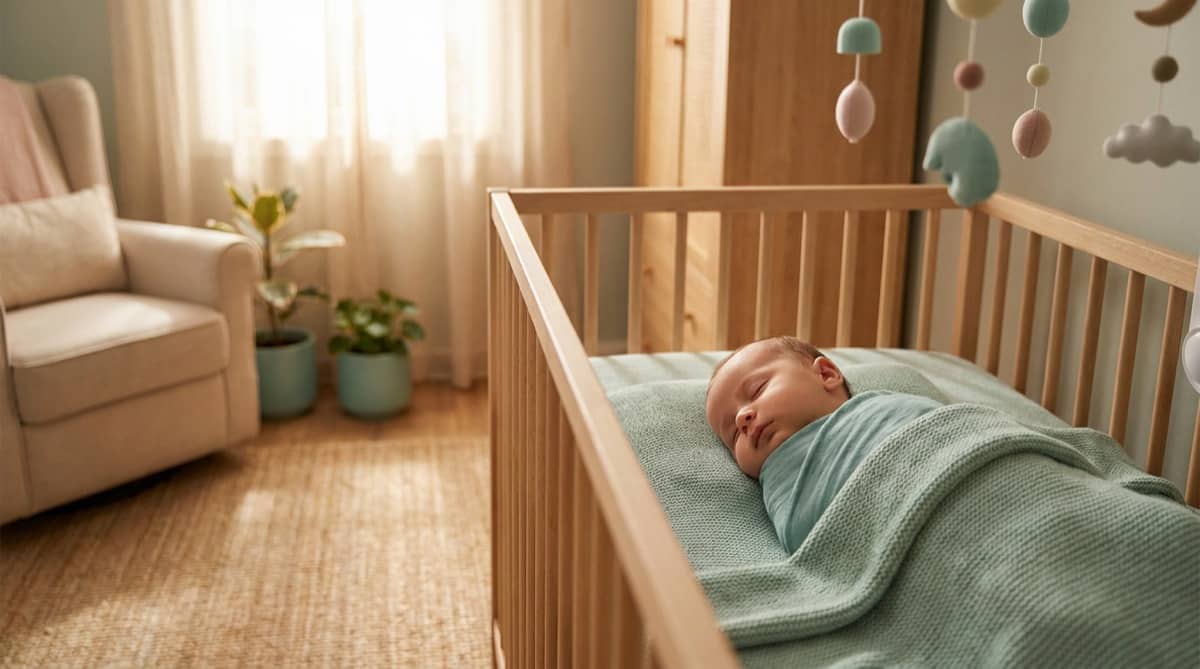
Make the room dark (blackout shades help), keep it cool and comfortable, and add steady white noise to mask household sound and soothe. Follow safe-sleep rules: on the back, on a firm flat surface, with nothing in the space. A consistent environment becomes a powerful sleep cue in itself.
Rule out regressions, leaps, and discomfort
Developmental leaps and the classic regressions around four, eight-to-ten, and eighteen months temporarily wreck sleep and usually pass in two to six weeks — ride them out without inventing new crutches. Also check the basics: hunger, a wet or dirty diaper, teething, too hot or cold, or illness. A baby in pain or discomfort cannot sleep through it.
When nothing is working
If your baby is past the newborn stage, healthy, and still cannot fall or stay asleep independently, a gentle sleep-training method with your pediatrician’s okay can help. And if sleep deprivation is eroding your own mental health, treat that as the medical issue it is and ask for support — exhausted parenting is not a badge of honor.
The bottom line
Most sleepless nights come down to overtiredness, mismatched wake windows, an inconsistent routine, sleep crutches, or a passing regression. Fix the windows, keep a short consistent wind-down, practice drowsy-but-awake, optimize the room, and rule out discomfort. When in doubt — or when it is wearing you down — loop in your pediatrician.
Was this article helpful?
Frequently asked questions
Why won’t my baby sleep even when tired?
The most common reason is overtiredness: when a baby stays awake past their window, stress hormones rise and make it harder to fall and stay asleep — so an exhausted baby fights sleep. The fix is counterintuitive: aim for slightly earlier sleep and respect wake windows so they go down before hitting the overtired zone.
What are wake windows by age?
Roughly: newborn 45–60 min; 2–3 months 60–90 min; 4–5 months 75–120 min; 6–8 months 2–3 hr; 9–12 months 3–4 hr; toddlers longer with one nap. Using age-appropriate windows prevents both an under-tired baby who won’t settle and an overtired one who can’t.
How do I get my baby to sleep without being held?
Practice putting your baby down drowsy but awake so they learn to fall asleep in the crib, build a consistent short wind-down routine, and use white noise and darkness. If they only sleep when held well past the newborn stage, gentle sleep-training methods can teach independent settling.
Is it a sleep regression?
Possibly. Predictable regressions around 4, 8–10, and 18 months — driven by developmental leaps — temporarily disrupt sleep. They usually last 2–6 weeks. Keep routines consistent and avoid creating new sleep crutches you will need to undo later.
When should I worry about my baby not sleeping?
Call your pediatrician if poor sleep comes with poor weight gain, breathing pauses or loud snoring, signs of illness or pain, or if your baby seems inconsolable. Also reach out if sleep deprivation is harming your own mental health — that is a medical issue worth addressing.
References
- 1.Healthy Sleep Habits: How Many Hours Does Your Child Need? — American Academy of Pediatrics (HealthyChildren.org)
- 2.Getting Your Baby to Sleep — American Academy of Pediatrics (HealthyChildren.org)