The 4-Month Sleep Regression, Explained
Why sleep falls apart around 4 months and how to get through the permanent change.
By Marcus Hale · Senior gear writer & testing lead
Updated June 11, 2026

Just as many babies start sleeping in longer stretches, the four-month sleep regression can blow it all up — sudden frequent night wakings, short naps, and a baby who fights sleep they used to fall into easily. Unlike other regressions, this one reflects a permanent change in how your baby sleeps. Understanding that reframes the whole experience and points to what actually helps.
Why it is really a "progression"
Around three to five months, your baby’s sleep matures from newborn sleep into a more adult-like structure with cycles that move through lighter and deeper stages. Between cycles, everyone briefly wakes. The catch: if your baby has only ever fallen asleep while being rocked, fed, or held, they will need that same help to get back to sleep at each of these new wakings. The "regression" is really a developmental leap forward.
How to recognize it
Hallmarks include a baby who was sleeping longer stretches suddenly waking every couple of hours, naps shrinking to one sleep cycle (around 30–45 minutes), increased fussiness around sleep, and more night feeding. It usually lands somewhere between three and five months and tends to last two to six weeks.
Build the skill that matters: independent sleep
Because the underlying change is permanent, the goal is not to wait it out but to help your baby learn to fall asleep — and fall back asleep — on their own. The cornerstone habit is putting your baby down drowsy but awake so they practice the skill at the start of sleep, which then carries into the between-cycle wakings. Expect some protest as they learn.
Tighten wake windows and routine
Overtiredness makes the regression worse. At this age, aim for wake windows of roughly 75 to 120 minutes and watch sleepy cues. Keep a short, consistent wind-down before each sleep so the routine itself signals sleep. Predictability is calming for a baby whose internal sleep map just got redrawn.
Optimize the environment and avoid new crutches
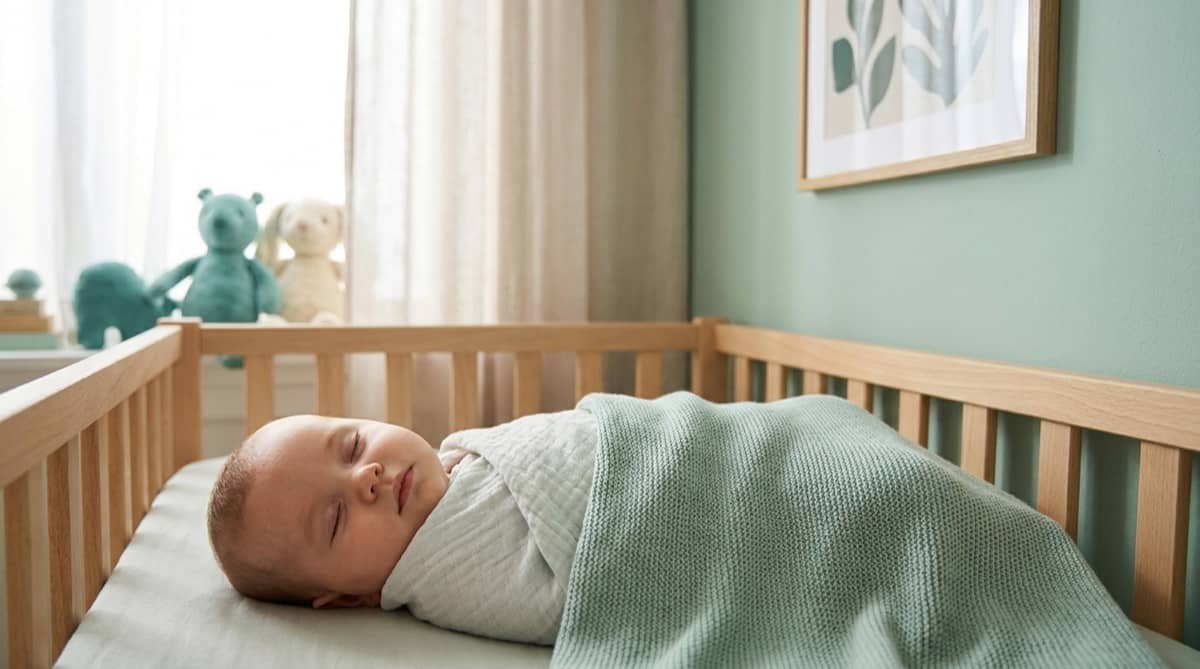
Darken the room, add white noise, and keep the space cool and safe (on the back, firm flat surface, nothing inside). In the thick of sleepless nights it is tempting to introduce whatever stops the crying — a new feed-to-sleep habit, hours of rocking — but each new crutch is something you will later have to undo. Lean on consistent, sustainable soothing instead.
The bottom line
The four-month regression is a permanent maturation of sleep, not a temporary glitch — which is why the fix is teaching independent settling rather than just waiting. Use age-appropriate wake windows, a consistent routine, drowsy-but-awake practice, and a dark, white-noise room, and avoid new sleep crutches. It typically smooths out within a few weeks.
Was this article helpful?
Frequently asked questions
What causes the 4-month sleep regression?
It is a permanent maturation of sleep architecture: a baby’s sleep reorganizes into distinct cycles with lighter and deeper stages, like adult sleep. Between cycles they briefly wake, and if they can only fall asleep with help (rocking, feeding), they signal for that help at every waking. It is development, not regression.
How long does the 4-month sleep regression last?
Typically 2 to 6 weeks. Because the underlying change is permanent, "getting through it" really means helping your baby learn to fall back asleep independently, which smooths the new cycle transitions.
How do I survive the 4-month regression?
Tighten wake windows (around 75–120 minutes at this age), keep a short consistent bedtime routine, put baby down drowsy but awake to practice self-settling, and keep the room dark with white noise. Avoid building brand-new sleep crutches you will later have to undo.
Should I sleep train during the 4-month regression?
You can begin gentle sleep-training foundations now if your pediatrician agrees, since this is when independent-sleep skills become especially useful. Some families wait until things stabilize. Either way, drowsy-but-awake practice is the core habit.
Is the 4-month regression the same for every baby?
No — timing ranges from about 3 to 5 months and intensity varies. Some babies barely notice; others wake frequently for weeks. Multiple night wakings, shorter naps, and fussiness around sleep are the hallmark signs.
References
- 1.Infant Sleep — American Academy of Pediatrics (HealthyChildren.org)
- 2.Healthy Sleep Habits — American Academy of Pediatrics (HealthyChildren.org)