Starting Solids: A First-Foods Guide
When and how to introduce solid foods to your baby.
By Marcus Hale · Senior gear writer & testing lead
Fact-checked by Dana Reyes (CPST-certified car seat & safety editor)
Updated June 11, 2026
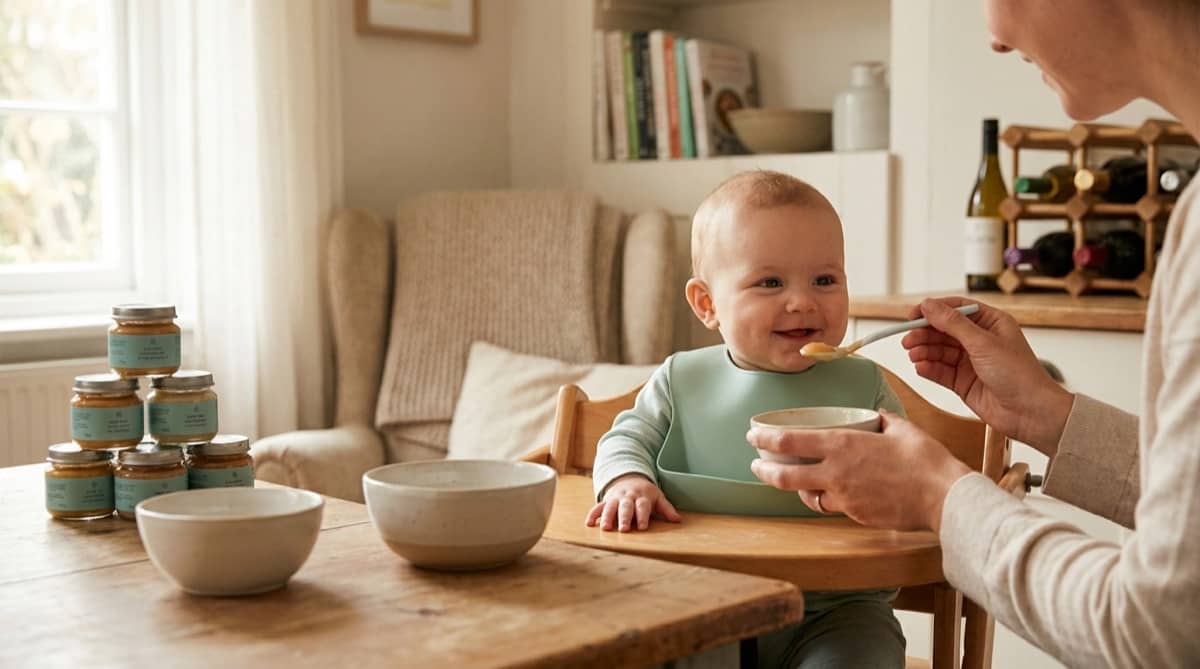
Starting solids is a milestone wrapped in questions: when, what, how much, and what about allergies. The reassuring truth is that the evidence has converged on clear, simple guidance — and much of the old advice (wait on allergens, start with rice cereal, follow a strict order) has been overturned. This guide, aligned with AAP and CDC recommendations and checked by our medical reviewer, walks through readiness, first foods, allergen introduction, and the safety rules that matter most.
When is a baby ready for solids?
Around six months, most babies hit the developmental signs that signal readiness — and these signs matter more than the calendar. Look for all four together: sitting with support and steady head control, loss of the tongue-thrust reflex (food no longer automatically pushed out), active interest in what you are eating, and the ability to move food to the back of the mouth and swallow. Solids before four months are not recommended; the gut and oral skills are not ready, and early solids do not improve sleep despite the popular myth.
Why iron comes first
Babies are born with iron stores that begin to deplete around six months, right as solids begin — which is why iron, not "easy" foods, should drive your first choices. Excellent iron-rich starters include puréed or finely minced meat, iron-fortified infant cereal, well-cooked and mashed lentils and beans, and tofu. Pair iron-rich foods with vitamin C sources (like puréed fruit) to boost absorption. The old default of starting with rice cereal is fine but no longer required, and there is no medical reason to introduce vegetables before fruit.
Introduce allergens early — not late
For years parents were told to delay peanuts, eggs, and other allergens. Research reversed this: introducing common allergens early (around six months) and keeping them in the diet regularly reduces the risk of developing a food allergy. Offer them in safe forms — thinned smooth peanut butter mixed into purée, well-cooked egg — never whole nuts or large globs. Introduce one allergen at a time on a day you can watch your baby, and continue offering it a few times a week. If your baby has severe eczema or a known egg allergy, ask your pediatrician about the safest approach and timing.
Baby-led weaning or purées?
Both approaches work. Baby-led weaning skips purées and offers soft, graspable finger foods (think a roasted sweet-potato wedge or a strip of well-cooked meat) so the baby self-feeds from the start; the traditional route begins with spoon-fed smooth textures and advances to lumps and finger foods. You can mix the two freely. The readiness signs, the iron priority, and the choking-safety rules are the same either way — the choice is about your comfort and your baby’s temperament.
Choking hazards and foods to avoid
Gagging (loud, with coughing) is a normal protective reflex and is not choking (silent, no air movement); learn the difference and stay calm and present at meals. Avoid genuine hazards: whole grapes and cherry tomatoes (quarter them lengthwise), nuts and popcorn, hard raw vegetables, large chunks of meat or cheese, and coin-shaped hot dogs. Also avoid honey before twelve months (infant botulism risk), cow’s milk as a main drink before one year, and added salt and sugar. Always seat your baby upright and supervise every meal.
How much, how often
In the beginning, solids are practice rather than primary nutrition — a few teaspoons once a day is plenty, building gradually toward two to three small meals by eight or nine months. Breast milk or formula remains the main source of calories and nutrients until the first birthday. Follow your baby’s cues: leaning in and opening up means more; turning away, clamping the mouth, or losing interest means done. Never force the last spoonful.
The bottom line
Wait for the readiness signs around six months, lead with iron-rich single-ingredient foods, introduce allergens early and keep them in rotation, respect the choking-hazard list, and let breast milk or formula carry the nutrition load through year one. Pick purées, baby-led weaning, or a blend — the principles do not change.
Was this article helpful?
Frequently asked questions
How do I know my baby is ready for solids?
Look for four signs together, usually around 6 months: baby can sit with support and hold their head steady, has lost the tongue-thrust reflex (no longer automatically pushing food out), reaches for or shows interest in your food, and can move food to the back of the mouth to swallow. Age alone is not enough — the developmental signs matter.
What foods should I introduce first?
Iron is the priority because a baby’s iron stores begin to run low around 6 months. Strong first foods include puréed or finely minced meat, iron-fortified infant cereal, well-cooked lentils and beans, and tofu. Texture matters less than iron content and single-ingredient simplicity.
Should I delay allergens like peanut and egg?
No — current guidance is the opposite. Introducing common allergens (peanut, egg, dairy, wheat, soy, fish) early, around 6 months, and keeping them in the diet regularly, lowers the risk of food allergy. Offer them in age-safe forms (e.g., thinned peanut butter, never whole nuts). If your baby has severe eczema or an egg allergy, talk to your pediatrician about timing.
What is baby-led weaning vs purées?
Baby-led weaning offers soft, graspable finger foods from the start and lets baby self-feed; the purée approach starts with spoon-fed smooth textures and progresses. Both are valid and can be combined. Whichever you choose, the readiness signs, iron priority, and choking-hazard rules are identical.
What foods should babies avoid?
Avoid honey before 12 months (botulism risk), cow’s milk as a main drink before 12 months, added salt and sugar, and choking hazards: whole grapes, nuts, popcorn, hard raw vegetables, chunks of meat or cheese, and hot dogs in coin shapes. Cut round foods lengthwise and offer soft textures.
How much should a 6-month-old eat?
At first, almost nothing — solids are about practice, not calories. Start with a few teaspoons once a day and follow your baby’s cues, building toward 2–3 small meals by 8–9 months. Breast milk or formula remains the primary source of nutrition until 12 months.
References
- 1.Starting Solid Foods — American Academy of Pediatrics (HealthyChildren.org)
- 2.Infant Food and Feeding — American Academy of Pediatrics
- 3.When, What, and How to Introduce Solid Foods — CDC