Toddler Meal Ideas & Beating Picky Eating
Balanced, realistic toddler meals and gentle strategies for picky eaters.
By Priya Nair, IBCLC · Lactation consultant & feeding editor
Fact-checked by Dr. Elena Vasquez, MD, FAAP (Board-certified pediatrician & medical reviewer)
Updated June 11, 2026
The Short Answer: Structure the Day, Then Let Your Toddler Decide
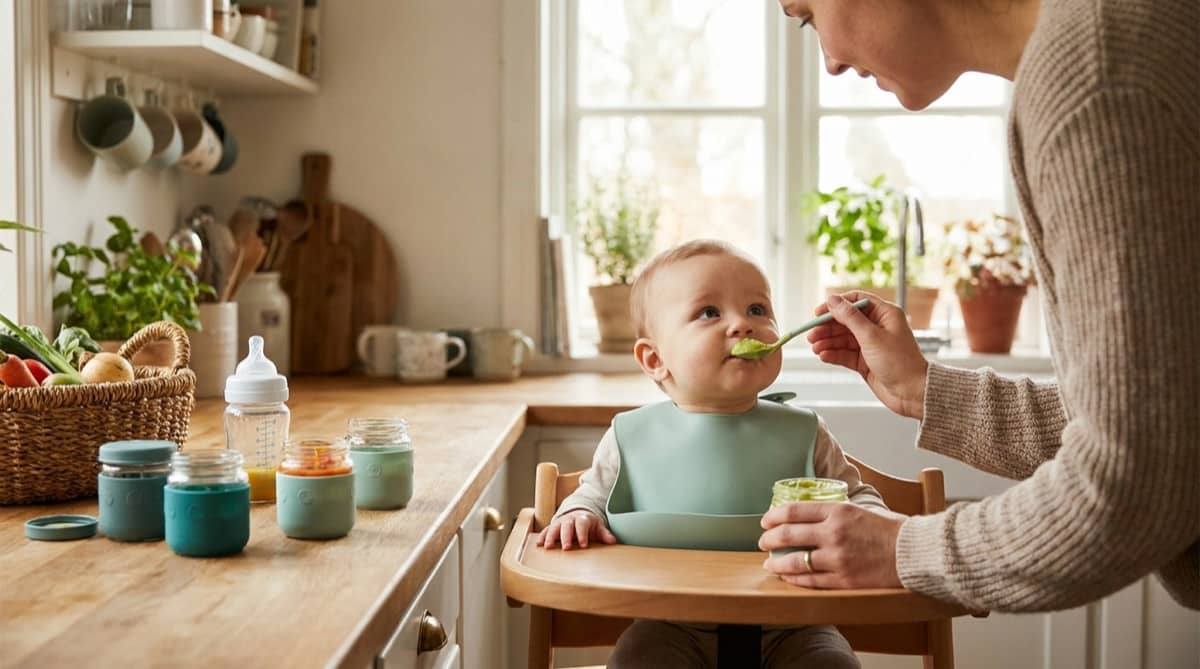
If you remember one thing about feeding a toddler, make it this: you decide what is offered and when and where it's served; your child decides whether to eat and how much. Pediatric feeding specialists call this the "division of responsibility," and it is the single most evidence-backed antidote to mealtime battles. Your job is to put a balanced, choking-safe spread of food on the table on a predictable schedule — roughly three meals and two to three small snacks a day, spaced about two to three hours apart. Your toddler's job is to listen to their own hunger and fullness. When you try to control how much goes in (cajoling, the "three more bites," the airplane spoon, the bargaining over dessert), you accidentally teach kids to ignore their internal cues, which makes picky eating worse over months and years.
This matters because a toddler's appetite genuinely shrinks and swings after the first birthday. The American Academy of Pediatrics (AAP) is explicit that parents "will probably notice a sharp drop" in appetite after age 1, because growth slows dramatically — a baby roughly triples their birth weight in year one, then gains only about 3–5 pounds across the entire second year. A child who devoured purées at 9 months and now eats three bites of dinner and calls it quits is, in the vast majority of cases, completely normal. The portions are small, the preferences are erratic, and the whole thing tends to even out over a week rather than a single meal. Once you accept that rhythm, feeding gets dramatically less stressful and you stop reading every refusal as a problem to solve.
How Much a Toddler Actually Eats (Portions and Calories by the Numbers)
Parents consistently overestimate how much a 1- to 3-year-old needs, then panic when the plate comes back full. Here are the real numbers. The AAP's working rule for calories is about 40 calories per inch of height per day — so a 32-inch toddler needs roughly 1,300 calories, with most 1- to 3-year-olds landing somewhere between 1,000 and 1,400 calories daily depending on size and activity. For portions, two rules of thumb make life easy: a toddler serving is about one-quarter of an adult serving, and you can start a new food with about one tablespoon per year of age, offering more only if they ask. A 2-year-old's "serving" of cooked carrots, then, is about two tablespoons — a startlingly small amount that nonetheless counts as a real serving.
Across a day, the AAP describes roughly six grain servings (a serving is a quarter-to-half slice of bread or four tablespoons of cooked rice, pasta, or cereal), two to three vegetable servings, two to three fruit servings (a serving is about a quarter cup cooked or half a piece of fresh fruit), two to three dairy servings (half a cup of milk, a third of a cup of yogurt, or half an ounce of cheese), and about two protein servings (one ounce of meat or half an egg each). A real toddler dinner might be one ounce of shredded chicken, one to two tablespoons of soft vegetables, one to two tablespoons of fruit, and a quarter slice of buttered toast. That looks like almost nothing to an adult eye, and it is exactly right. Don't be alarmed if your child eats a big breakfast and barely touches dinner; toddlers self-regulate across days, and front-loading the morning is extremely common.
Drinks: Where Hidden Calories Quietly Sabotage Appetite
Drinks are the most overlooked lever in toddler feeding, and getting them wrong is the fastest way to create a picky eater who isn't actually hungry at meals. The AAP's recommendation is refreshingly simple: water and plain milk are the only two drinks a toddler needs. For ages 12 to 24 months, that means about 16 ounces (two cups) of whole milk per day plus water to thirst (roughly 1–4 cups). After the second birthday, switch to low-fat or nonfat milk at about 16–24 ounces (two to three cups) per day, unless your pediatrician has flagged a growth or weight concern. Too much milk — more than about 24 ounces — backfires twice over: it fills small stomachs so meals get refused, and the excess can contribute to iron-deficiency anemia by displacing iron-rich foods.
Juice is not necessary at all, and the AAP says it should never be given before age 1. From ages 1 to 3, cap juice at no more than 4 ounces per day of 100% juice, ideally watered down and served in a cup with a meal rather than sipped from a bottle all day. Skip sugary drinks entirely — sodas, sports drinks, fruit "drinks," and flavored milks all carry added sugar that the Dietary Guidelines say children under 2 should get essentially none of. Be wary of marketing-driven "toddler milks" and most plant-based milks (almond, oat, rice), which are nutritionally thin for this age; the one exception is fortified soy milk, which the AAP considers nutritionally comparable to dairy. A child who drinks their calories rarely has room — or motivation — to eat real food.
A Day of Meal Ideas (Breakfast, Lunch, Dinner, and Snacks That Actually Work)
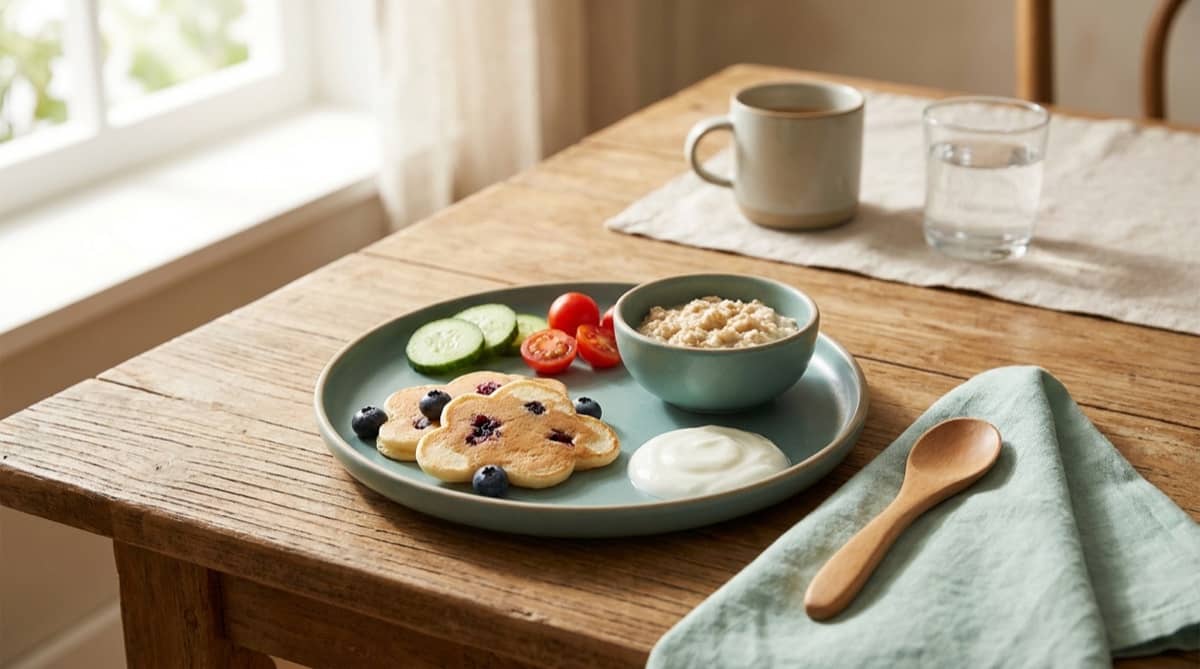
The goal at every meal is to put at least one food you know your child usually accepts alongside the new or less-loved foods, so there is always a safe landing spot and no pressure. Aim loosely for a protein, a produce, and a carbohydrate, with some fat for calories and satiety. Breakfast ideas: scrambled egg with soft buttered toast strips and a few raspberries; plain whole-milk yogurt swirled with mashed banana and a sprinkle of ground (not whole) chia or flax; oatmeal cooked with milk and stirred-in unsweetened applesauce; or a whole-grain pancake torn into pieces with thin smears of nut butter. Lunch ideas: cheese quesadilla wedges with mashed avocado; soft-cooked pasta with marinara and finely grated cheese; lentil soup with bread for dipping; or a deconstructed "snack plate" of cubed soft cheese, halved (lengthwise-quartered) blueberries, cucumber spears peeled and softened, and crackers.
Dinner ideas: shredded slow-cooked chicken or flaked salmon, soft roasted sweet potato, and steamed broccoli florets you can mash slightly; mini turkey-and-veggie meatballs cut into quarters with rice and peas; black beans and cheese folded into soft tortilla pieces; or simply a smaller, choking-safe version of whatever the family is eating — the single best long-term habit you can build. Snacks should be mini-meals, not just carbs: yogurt, fruit, cheese, hummus with soft veg, or a hard-boiled egg beat crackers-and-juice every time. A practical batch-cooking tip echoed by the CDC: freeze small portions of cooked vegetables, beans, and proteins in ice-cube trays so you can thaw a few bites at a time, which slashes waste when a toddler rejects something you'll need to re-offer eight or ten times anyway.
Why Toddlers Get Picky — and Why It's Usually Normal
Picky eating peaks between about ages 1 and 3 for predictable developmental reasons, not because you've done anything wrong. First, the appetite drop described above means kids simply need less food, so refusals multiply. Second, toddlers are wired for "neophobia" — a hardwired wariness of new foods that was protective in our evolutionary past, when a newly mobile child might otherwise sample something poisonous. Third, this is the age of autonomy: "no" and "mine" extend straight to the plate, and refusing food is one of the few powerful levers a toddler controls. The CDC reassures parents that wanting only a few favorite foods, or not wanting foods to touch on the plate, are developmentally normal behaviors that typically resolve on their own by about age 5.
The key insight from the evidence is that acceptance is built through repeated, pressure-free exposure. The CDC notes it may take 8 to 10 exposures before a young child is willing to try a new food — and "exposure" includes seeing it, touching it, smelling it, and playing with it, not just eating it. Most parents give up after two or three tries, concluding their child "hates" broccoli, when the child simply hasn't met it enough times yet. The fix is patience and repetition: keep calmly offering a rejected food about once a week, in small amounts, with zero commentary about whether they eat it. The exposures accumulate quietly, and one ordinary Tuesday the food gets eaten. Mixing a new food next to a familiar favorite — or letting your child see you eat and enjoy it first — speeds the process.
A Step-by-Step Plan to Expand a Picky Eater's Diet
Step 1: Lock in structure. Serve meals and snacks at roughly the same times each day, seated at the table, and end "grazing" in between — no all-day milk cup or snack pouch. A genuinely hungry toddler is a more adventurous toddler. Step 2: Always anchor with a safe food. Put one accepted item on the plate at every meal next to one or two target foods, so the meal is never all-or-nothing. Step 3: Serve family-style and model eating. Let your child serve themselves from small bowls when possible, and visibly eat and enjoy the target food yourself first — kids copy what they see far more than what they're told. Step 4: Offer choices, not commands. "Do you want the carrots or the peas?" preserves autonomy while still steering toward vegetables; "eat your carrots" invites a standoff.
Step 5: Use exposure techniques. Be playful — arrange food into faces, let them dip (a beloved sauce makes almost anything acceptable), and pair new foods with familiar favorites. Step 6: Keep portions tiny. One floret, one slice, one tablespoon. A heaping plate of a disliked food reads as a threat; a single bite reads as optional and safe. Step 7: Drop the pressure entirely. No bribing ("two bites for dessert"), no force, no negotiating, and no short-order cooking a second meal when they refuse — that simply trains rejection. Step 8: End meals neutrally. After a reasonable window (about 20–30 minutes), the meal is over without drama, and the next eating opportunity is the planned snack. Repeat daily. Across weeks, not days, the diet widens. Track exposures loosely if it helps you stay patient through try number seven.
Common Mistakes That Make Picky Eating Worse
The most damaging mistake is pressure in any form. "Just one more bite," rewards and bribes, praise for eating, and punishment for not eating all reliably backfire in the research: pressured kids eat less of the target food over time and develop more negative associations with it. The second classic trap is short-order cooking — making a separate, safe meal the moment your child refuses dinner. It feels kind in the moment, but it removes any reason to try the family food and locks in a tiny menu. Serve one meal (with a safe component built in), and trust that no healthy toddler will starve overnight; they'll eat at the next snack. The third mistake is grazing and drinking between meals, which means your child is never quite hungry enough to take a risk on something new.
Other frequent missteps: overreacting to refusals (a dramatic parental response turns rejection into a powerful attention-getting game), hiding vegetables exclusively (sneaking purées into sauces is fine for nutrition, but kids also need to see, touch, and learn to like vegetables in visible form), and giving up on a food after a couple of tries. Many parents also turn dessert into a high-stakes reward, which inadvertently signals that the "real" food is a chore to endure and the sweet is the prize — a framing that elevates sugar and demotes everything else. Finally, comparing your toddler to a sibling or a friend's child fuels anxiety; eating styles vary enormously and most cautious eaters are growing perfectly well. If your child is gaining weight along their curve and has energy, the day-to-day intake noise rarely matters.
Choking Safety: Non-Negotiable Food Prep Rules
Choking is a leading cause of injury and death in young children, and toddlers are at high risk because they're still mastering chewing and tend to eat on the move. The AAP advises cutting food for young children into pieces no larger than one-half inch and teaching them to chew well. Round, firm, and cylindrical foods are the most dangerous because they can plug the airway: whole grapes, cherry tomatoes, hot dogs, and string cheese should be cut lengthwise and then into small pieces — quarter grapes, slice hot dogs into thin half-moons or quarters, never serve them as coins. Keep these high-risk foods off the menu until about age 4 unless thoroughly modified: nuts and seeds, popcorn, hard or sticky candy, chewing gum, marshmallows, raw hard vegetables (carrot sticks, celery), hard apple chunks, and globs of thick peanut butter (spread it thin instead).
Equally important are the mealtime rules. Children should always eat sitting down at a table, never while walking, running, playing, lying down, riding in a car, or distracted by a screen — all of which raise choking risk. Supervise every meal and snack, and watch what older siblings hand to the baby (a four-year-old's popcorn is a genuine hazard for a fifteen-month-old). Avoid propping a child up to eat alone. The AAP also strongly recommends that every caregiver take a certified infant and child CPR and first-aid course through the American Red Cross or American Heart Association, so you know how to respond in the rare event of a true choking emergency rather than freezing. These are not suggestions to weigh against convenience; they are bright-line safety rules.
When to Call Your Pediatrician: Red Flags Beyond Ordinary Pickiness
Ordinary toddler pickiness is a feeding style, not a medical problem — but a smaller group of children have what specialists call a feeding disorder or "problem feeding," and that warrants evaluation. Call your pediatrician if your child is not gaining weight or is losing weight, falling off their growth curve, or has low energy, persistent fatigue, or pallor (possible iron-deficiency anemia, especially in heavy milk drinkers). Other red flags: eating fewer than roughly 20 total foods and dropping foods without adding new ones; an extremely restricted diet limited to a single texture (only crunchy, or only purées) well past the age when textures should have advanced; or gagging, choking, coughing, or vomiting consistently at meals, which can signal an oral-motor or swallowing issue rather than behavior.
Also seek care if mealtimes routinely involve significant distress for the child (panic, crying, retching at the sight of food), if feeding is taking 30+ minutes of stressful battling at every meal, or if your child gags or has reactions suggesting a swallowing problem or a possible food allergy (hives, swelling, wheezing, or vomiting after a specific food — seek urgent care for any breathing difficulty). A pediatrician can check growth and iron, rule out reflux, constipation, enlarged tonsils, or oral-motor delays, and refer to a feeding therapist, occupational therapist, registered dietitian, or — for extreme, anxiety-driven restriction — evaluate for avoidant/restrictive food intake disorder (ARFID). Trust your gut: you know your child, and "is this normal?" is always a reasonable question to bring to a visit.
What the Evidence Says (AAP, CDC, and the Dietary Guidelines)
The recommendations above are not folk wisdom; they track current US guidance. The CDC's Infant and Toddler Nutrition resources establish the core picky-eating science: the 8-to-10-exposure rule, the developmental normalcy of food jags and not wanting foods to touch (resolving by about age 5), and the practical strategies of modeling, offering choices, mixing new with familiar foods, and re-offering rejected items about a week apart. The AAP's HealthyChildren guidance supplies the quantitative backbone — roughly 40 calories per inch of height, a toddler serving being about a quarter of an adult portion, the one-tablespoon-per-year starting rule, and the appetite drop after the first birthday driven by slowing growth.
On drinks, a consensus expert panel convened by the AAP and partners (Healthy Eating Research) set the now-standard limits cited here: water and plain milk as the default, no juice under age 1, no more than 4 ounces of juice for ages 1–3, and avoidance of sugary and flavored drinks and most toddler/plant milks. The 2020–2025 Dietary Guidelines for Americans added the "birth to 24 months" recommendation that children under 2 avoid added sugars entirely. The choking-prevention rules — half-inch pieces, quartering round foods, avoiding high-risk foods until about age 4, seated and supervised eating, and CPR training — come directly from the AAP. Where guidance offers ranges rather than a single number, it's because healthy children genuinely vary; the throughline across every authority is the same calm message: offer good food on a schedule, prepare it safely, skip the pressure, and let your child's body do the regulating.
Was this article helpful?
Frequently asked questions
How many times should I offer a food my toddler rejects?
The CDC says it can take 8 to 10 exposures before a young child is willing to try a new food, so don't give up after a couple of tries. Keep re-offering the rejected food in a small amount about once a week, with no pressure or commentary. "Exposure" also counts when your child sees, touches, or smells the food — not just eats it.
How much milk should a toddler drink per day?
For ages 12–24 months, the AAP recommends about 16 ounces (two cups) of whole milk per day; after age 2, switch to low-fat or nonfat milk at about 16–24 ounces (two to three cups). More than about 24 ounces a day can fill a small stomach so meals get refused and may contribute to iron-deficiency anemia. Offer water alongside milk to cover thirst.
Should I make a separate meal if my toddler won't eat dinner?
No. Short-order cooking a second meal teaches your child that refusing food gets them their preferred option, which shrinks their diet over time. Instead, always include one safe, accepted food on the plate so the meal is never all-or-nothing, then end the meal calmly. No healthy toddler will go hungry overnight — the next planned snack is the next chance to eat.
What foods are the biggest choking hazards for toddlers?
The riskiest are round, firm, and cylindrical foods: whole grapes, cherry tomatoes, hot dogs, nuts and seeds, popcorn, hard or sticky candy, raw hard vegetables like carrot sticks, and globs of peanut butter. Cut grapes and similar foods lengthwise into quarters, slice hot dogs into thin pieces, spread nut butter thin, and avoid the highest-risk foods until about age 4. Always have children eat sitting down and supervised.
Is it normal for my toddler's appetite to suddenly drop?
Yes. The AAP notes a sharp appetite drop is normal after the first birthday because growth slows dramatically — toddlers gain only about 3–5 pounds across the entire second year. Appetite also swings day to day, so a child may eat a big breakfast and barely touch dinner. Look at intake across a whole week rather than one meal, and trust their hunger and fullness cues.
How much juice can a 1- to 3-year-old have?
The AAP recommends no juice at all before age 1, and no more than 4 ounces per day of 100% juice for ages 1–3. Serve it in a cup with a meal rather than sipped from a bottle throughout the day, ideally watered down. Whole fruit is always preferable to juice, and water plus plain milk are the only drinks a toddler actually needs.
When should I worry that picky eating is a real problem?
See your pediatrician if your child isn't gaining weight or is losing it, falls off their growth curve, seems tired or pale, gags or chokes regularly at meals, eats an extremely narrow range of foods or textures, or shows real distress at mealtimes. These can signal anemia, an oral-motor or swallowing issue, reflux, or a feeding disorder rather than ordinary pickiness, and may benefit from evaluation or feeding therapy.
What's a good portion size for a toddler meal?
A toddler serving is about one-quarter of an adult serving, and a useful starting rule is one tablespoon of each food per year of age. A real dinner for a 2-year-old might be one ounce of shredded chicken, two tablespoons of soft vegetables, two tablespoons of fruit, and a quarter slice of toast. Serve small and offer more only if your child asks for it.
References
- 1.Infant and Toddler Nutrition: Picky Eaters — Centers for Disease Control and Prevention (CDC)
- 2.Serving Sizes for Toddlers — American Academy of Pediatrics (HealthyChildren.org)
- 3.Choking Prevention — American Academy of Pediatrics (HealthyChildren.org)
- 4.Recommended Drinks for Young Children Ages 0-5 — American Academy of Pediatrics (HealthyChildren.org)
- 5.Toddler Nutrition — American Academy of Pediatrics (HealthyChildren.org)
- 6.Infant and Toddler Nutrition: Foods and Drinks — Centers for Disease Control and Prevention (CDC)
- 7.Feeding & Nutrition Tips: Your 2-Year-Old — American Academy of Pediatrics (HealthyChildren.org)