Introducing Peanuts to Baby: Early & Safe
Why early peanut introduction prevents allergy — and how to do it safely.
By Dana Reyes · CPST-certified car seat & safety editor
Updated June 11, 2026
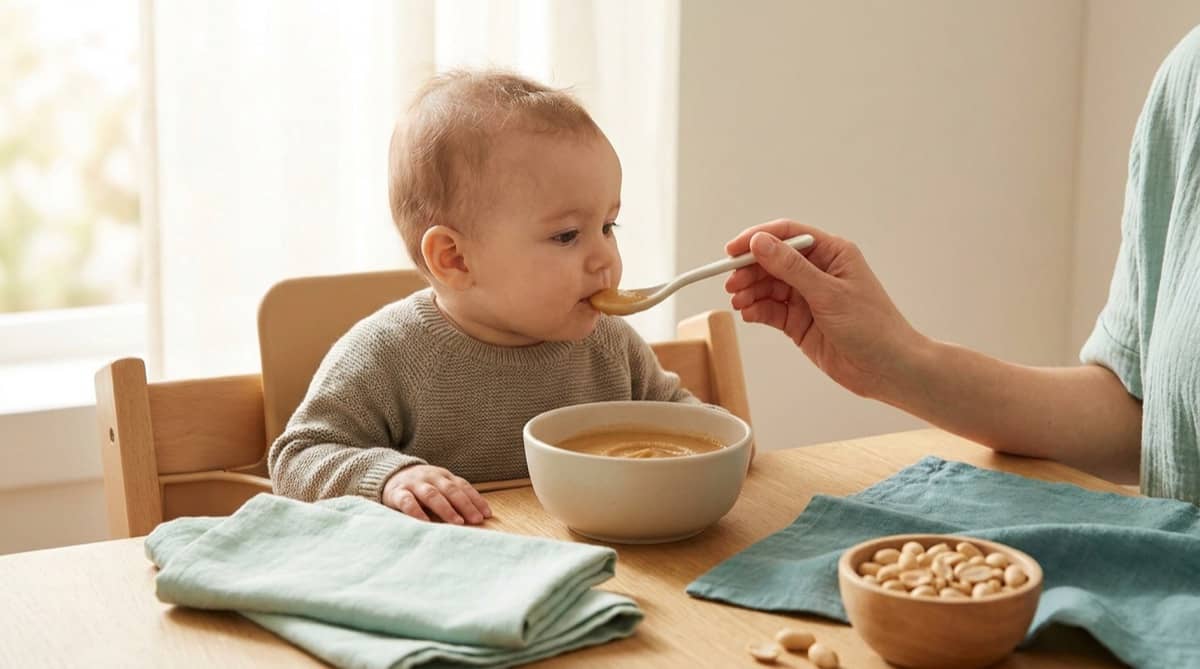
The advice on peanuts has completely flipped: where parents were once told to delay peanut for years, the evidence now shows that early, regular introduction is one of the most effective ways to prevent peanut allergy. This guide, aligned with AAP and allergy-guideline recommendations, covers when and how to introduce peanut safely, what reactions to watch for, and the higher-risk babies who need a doctor’s plan first.
Why early introduction matters
Landmark research found that introducing peanut in infancy and continuing it regularly dramatically reduced the rate of peanut allergy compared with avoidance. The immune system appears to learn tolerance when exposed early through the diet. As a result, guidelines now recommend introducing peanut around six months for most babies — delaying can actually increase allergy risk.
When your baby is ready
Introduce peanut once your baby shows the general signs of solids readiness around six months: sitting with support, steady head control, loss of the tongue-thrust reflex, and interest in food. Ideally introduce a few other "starter" foods first so you know your baby tolerates solids, then add peanut as one of the early allergens.
How to offer peanut safely
Never give whole or chopped peanuts (a serious choking hazard). Instead, thin a teaspoon of smooth peanut butter with warm water, breast milk, or formula until it’s a thin, runny purée, and offer a small amount — or mix it into a food your baby already eats. Dissolvable peanut puffs are another option. Offer it at home, earlier in the day, when you can watch your baby for a couple of hours afterward.
Watching for a reaction
Most babies tolerate peanut with no issue, but know the signs of an allergic reaction: hives, swelling of the face/lips/eyes, vomiting, widespread redness, coughing, wheezing, trouble breathing, or sudden lethargy — usually within minutes to two hours. For mild symptoms, call your provider. For any sign of a severe reaction (difficulty breathing, throat swelling, floppiness, repetitive vomiting), call emergency services immediately.
Keep it in the diet
Introduction isn’t one-and-done. To maintain tolerance, keep peanut in your baby’s diet regularly — a few times a week — once it’s been introduced without reaction. The same applies to other allergens your baby tolerates. Consistency is part of what builds and maintains tolerance.
Higher-risk babies need a plan
Babies with severe eczema and/or an existing egg allergy have a higher risk of peanut allergy. For them, guidelines recommend talking to your pediatrician or an allergist before introduction — they may recommend allergy testing and, in some cases, supervised introduction as early as four to six months. The key message: don’t just delay; get a tailored plan.
The bottom line
Introduce peanut early — around six months with solids readiness — in a safe smooth form (thinned peanut butter or puffs, never whole nuts), and keep it in the diet regularly to prevent allergy. Watch for reactions when you first offer it, and if your baby has severe eczema or an egg allergy, check with your pediatrician or allergist first.
Was this article helpful?
Frequently asked questions
When should I introduce peanuts to my baby?
For most babies, introduce peanut around 6 months, once they’re developmentally ready for solids, and then keep it in their diet regularly (a few times a week). Research shows early, sustained introduction dramatically lowers the chance of developing a peanut allergy compared with delaying it.
How do I give peanut to a baby safely?
Use a smooth, age-safe form — never whole or chopped peanuts, which are choking hazards. Thin smooth peanut butter with warm water, breast milk, or formula until it’s a runny purée, mix it into a familiar food, or offer a dissolvable peanut puff. Start with a small amount at home earlier in the day so you can watch for any reaction.
What are signs of a peanut allergy reaction?
Watch for hives, swelling (especially of the face, lips, or eyes), vomiting, widespread redness, coughing or wheezing, trouble breathing, or sudden lethargy, usually within minutes to about two hours. Mild reactions warrant a call to your provider; signs of a severe reaction (trouble breathing, swelling of the throat, floppiness) are an emergency — call 911.
My baby has eczema — should I still introduce peanut?
Babies with severe eczema and/or an egg allergy are at higher risk of peanut allergy, and guidelines recommend talking to your pediatrician or an allergist first. They may advise allergy testing and, in some cases, introducing peanut as early as 4–6 months under guidance. Don’t simply delay — discuss the safest plan for your baby.
Do I need to introduce other allergens too?
Yes. The same early-and-often principle applies to other common allergens — egg, dairy, wheat, soy, tree nuts, fish, shellfish, and sesame. Introduce them one at a time in safe forms starting around 6 months and keep the ones your baby tolerates in regular rotation.
References
- 1.Preventing Peanut Allergies — American Academy of Pediatrics (HealthyChildren.org)
- 2.Food Allergies in Children — American Academy of Allergy, Asthma & Immunology