Bottle Refusal: Getting a Breastfed Baby to Take a Bottle
Why babies refuse bottles and the tactics that actually work.
By Priya Nair, IBCLC · Lactation consultant & feeding editor
Updated June 11, 2026
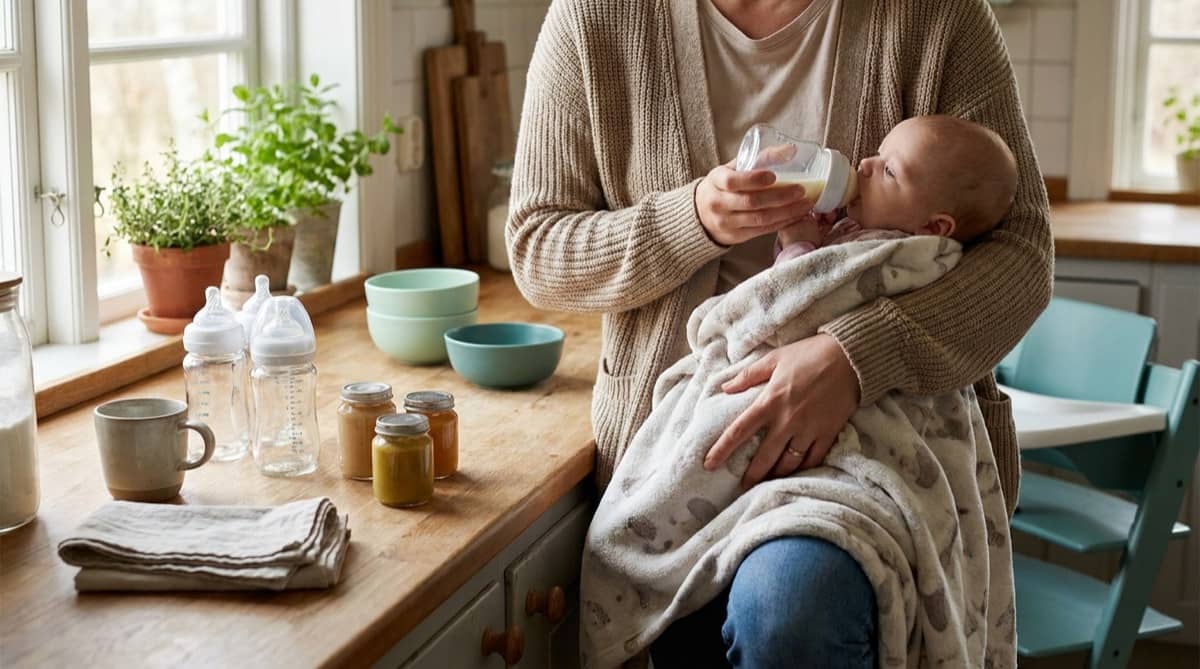
Bottle Refusal: Getting a Breastfed Baby to Take a Bottle touches every part of early parenting — sleep, growth, mood, and the household routine. There's no one "right" way, but a few principles make every feeding journey easier.
Get the basics right first
Whether breastfeeding, formula-feeding, or mixed, the goals are the same: an adequate amount, a comfortable feeding position, and a calm baby. Watch for hunger cues (rooting, sucking on fingers, increased alertness) and fullness cues (turning away, slowing down, falling asleep). Reading these reliably matters more than counting ounces.
Both breast and formula provide complete nutrition in the first year. The "best" feeding method is the one that keeps your baby growing, your mental health intact, and your household functional. That's it.
Common questions
Most new parents ask the same things: how often, how much, why won't they finish, why do they finish so fast, is this normal. Quick answers: newborns feed 8–12 times a day, often in clusters, and intake varies. Growth spurts at ~3 weeks, 6 weeks, 3 months, and 6 months bring a temporary feeding frenzy — they pass within a few days.
Gas, hiccups, and spit-up are part of the package. Painful crying after every feed, blood in spit-up, persistent refusal to feed, or fewer than four wet diapers a day in a young baby warrant a call to your pediatrician.
Starting solids
Around 6 months, most babies are ready for solids. Look for: sitting up well-supported, good head control, interest in your food, and the loss of the tongue-thrust reflex. Start with one food at a time, give it three days, and watch for reactions. Iron-rich first foods (fortified cereals, puréed meats, well-cooked beans) help replenish stores that drop around this age.
Feeding the family
Once solids start, family meals become tractable again. Eat with your baby when you can — they learn variety, social eating, and the rhythm of meals by watching you. Repeat exposures are key: research suggests it can take 8–15 tries before a baby accepts a new food, so a "no" today isn't permanent.
The bottom line
Feed when hungry, stop when full, follow the developmental signs, and don't compare your baby's intake to anyone else's. Your pediatrician's growth chart is the only chart that matters.
Was this article helpful?