Tummy Time: Why and How
Build strength and avoid flat spots with daily tummy time.
By Marcus Hale · Senior gear writer & testing lead
Updated June 11, 2026
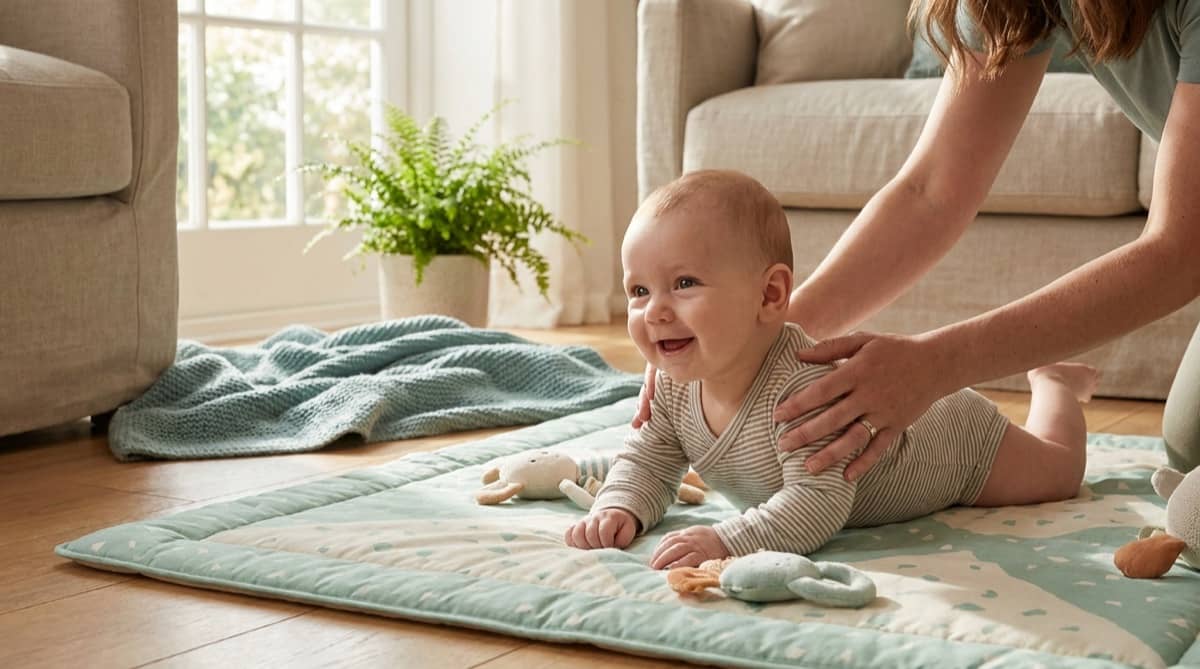
Tummy time is small, simple, and surprisingly important — the daily practice that builds the strength your baby needs to roll, sit, and crawl, and that protects against flat spots on the head. Since babies sleep on their backs for safety, awake tummy time is how they get the prone practice they used to get during sleep. This guide covers how to start, how much, and how to win over a baby who hates it.
What tummy time is and why it matters
Tummy time is exactly what it sounds like: supervised time spent on the stomach while your baby is awake. It strengthens the head, neck, shoulders, arms, and core — the muscles behind every gross-motor milestone to come. It also relieves pressure on the back of the head, helping prevent positional plagiocephaly (flat spots) that can develop from constant back-lying. "Back to sleep, tummy to play" sums up the balance.
How to start
Begin in the first days home, gently and briefly. The easiest entry point is skin-to-skin or chest-to-chest: recline and lay your baby tummy-down on your chest so they lift their head toward your face. You can also use a firm flat surface or a lap. Start with one to two minutes a few times a day, and build from there. Frequent and short beats rare and long.
How much, and how to build up
Increase gradually as strength grows, aiming for roughly 15 to 30 minutes of total tummy time a day by around seven weeks, spread across multiple short sessions, and more as your baby tolerates it. There’s no need to hit a number in one go — three to five short bouts throughout the day are perfect, ideally after diaper changes or naps when baby is alert.
Winning over a tummy-time hater
Many babies protest at first — it’s hard work for them. Make it easier and more fun: keep sessions short, do them on your chest or across your lap, get face-to-face at their level, talk and sing, prop a baby-safe mirror or a high-contrast toy in front of them, and pick alert, content moments (not when hungry or overtired). Tolerance almost always improves within a week or two of consistent practice.
Safety basics
Tummy time is awake-and-supervised only — never for sleep. Use a firm, flat surface (or your body), keep it clear of pillows and soft bedding, and stay right there the whole time. If your baby falls asleep, move them onto their back on a safe sleep surface. Stop a session if your baby is genuinely distressed rather than just mildly fussy, and try again later.
What progress looks like
Over the first months you’ll see the payoff: from briefly lifting the head, to pushing up on the forearms, to lifting the chest and looking around, to eventually pushing up on straight arms. These milestones lead directly into rolling and sitting. If your baby strongly resists all head-lifting by a few months, has a noticeable head-turn preference, or you’re worried about a flat spot, mention it to your pediatrician.
The bottom line
Start tummy time from birth in short, frequent, supervised sessions and build toward 15–30 minutes a day by about seven weeks. It develops the strength behind rolling, sitting, and crawling and prevents flat spots. Make it fun and face-to-face, keep it awake-only, and stay close — "back to sleep, tummy to play."
Was this article helpful?
Frequently asked questions
When should I start tummy time?
You can start from the first days home, beginning with just a couple of minutes a few times a day — for example, laying your baby tummy-down on your chest while you recline. Early, frequent, short sessions build tolerance and strength before babies are expected to do more.
How much tummy time does a baby need?
Build gradually: aim for several short sessions daily, working toward roughly 15–30 minutes of total tummy time per day by around 7 weeks, and more as your baby gets stronger. Spreading it across the day in short bursts is easier than one long session.
My baby hates tummy time — what do I do?
Very common. Try shorter, more frequent sessions; do it on your chest or across your lap; get down to their eye level and talk or sing; use a mirror or high-contrast toy; and choose times when they’re alert and not hungry or tired. Persistence pays — tolerance usually grows within a couple of weeks.
Why is tummy time important?
Because babies now sleep on their backs (rightly, for SIDS prevention), they need awake tummy time to develop the head, neck, shoulder, and core strength used for rolling, sitting, and crawling — and to prevent flat spots on the back of the head (positional plagiocephaly). It’s one of the most important things you can do for early physical development.
Is tummy time safe for sleep?
No. Tummy time is for awake, supervised play only. Babies must always be placed on their backs to sleep. If your baby falls asleep during tummy time, move them to their back on a safe sleep surface.
References
- 1.Back to Sleep, Tummy to Play — American Academy of Pediatrics (HealthyChildren.org)
- 2.Movement Milestones: Birth to 3 Months — American Academy of Pediatrics (HealthyChildren.org)