How to Swaddle a Baby (Step by Step)
A simple, safe swaddle in five steps.
By Dana Reyes · CPST-certified car seat & safety editor
Updated June 11, 2026
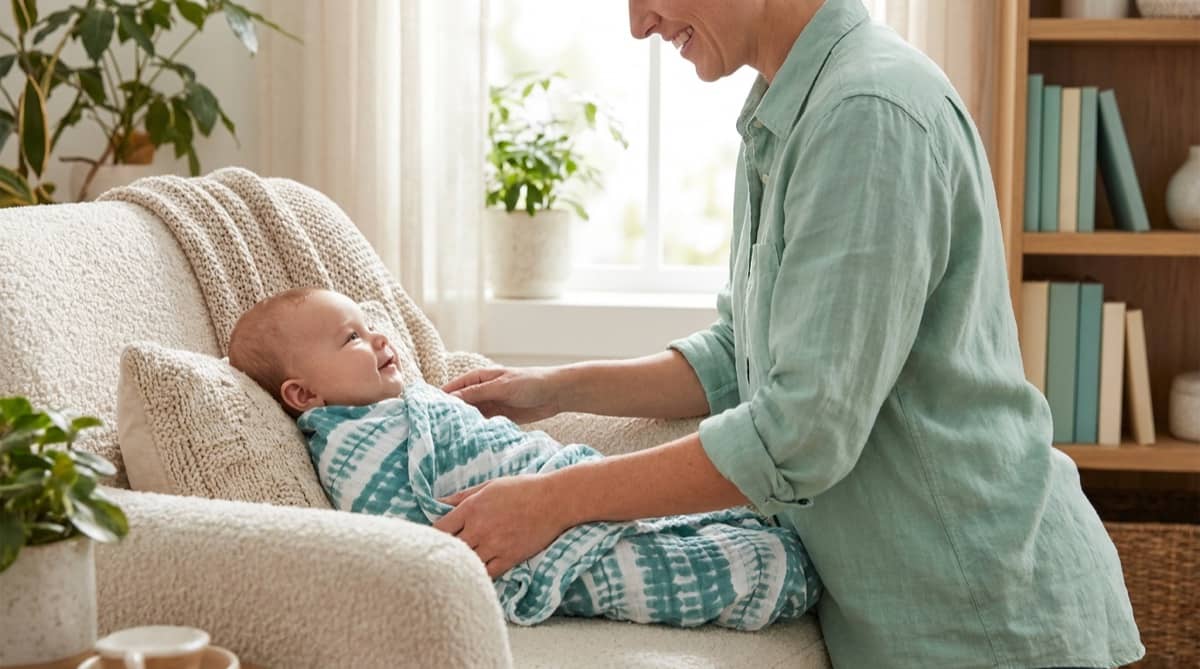
A good swaddle can transform a startled, flailing newborn into a calm, settled one by mimicking the snugness of the womb and taming the startle reflex that jolts babies awake. But swaddling has two non-negotiable safety rules — back-sleeping and stopping at the first sign of rolling — plus a hip-healthy technique. This step-by-step guide, aligned with AAP guidance, shows how to swaddle safely and when to stop.
How to swaddle, step by step
Lay a thin, breathable blanket in a diamond and fold the top corner down a few inches. Place your baby face-up with their shoulders just below the fold. Gently hold one arm at their side, bring that same side of the blanket across the chest, and tuck it under the opposite side of the body. Fold the bottom corner up over the feet, leaving room for the legs to bend. Finally, bring the remaining side across and tuck it, leaving only the head and neck exposed. The wrap should be firm at the chest and roomy at the hips.
Snug arms, loose hips
The defining rule of a safe swaddle: firm around the arms and chest, loose around the legs. You should be able to slip two to three fingers between the blanket and your baby’s chest — snug enough not to unravel, not so tight it restricts breathing. Critically, the legs must be free to bend up and out at the hips; binding them straight and tight can lead to hip dysplasia. Think "burrito on top, sleeping bag on the bottom."
Always place a swaddled baby on their back
A swaddled baby must always be put down on their back to sleep, every time. Side- or stomach-placement of a swaddled baby is dangerous because the wrapped arms cannot help them reposition or clear their airway. Back-sleeping plus a correct swaddle is safe; any other position is not.
When to stop swaddling
Stop swaddling at the very first signs of rolling — often somewhere between two and four months, though it varies. Once a baby can roll, a swaddle that traps the arms prevents them from pushing up or turning their head if they end up face-down, which is a serious risk. The moment you see rolling attempts, transition out, even if the swaddle was working beautifully.
Transitioning out of the swaddle
Make the change gradually if you can: try one arm out for a few nights, then both, or move to a transitional sleep sack with detachable wings, then a standard wearable blanket with the arms free. Some babies protest the change for a few nights as they adjust to more freedom; staying consistent and keeping the rest of the bedtime routine the same helps them settle into the new setup.
The bottom line
Wrap snug at the arms and chest, loose at the hips so the legs can bend, and always lay your swaddled baby on their back. Watch closely for the first signs of rolling and stop swaddling immediately when they appear, moving to an arms-free sleep sack. Done right, swaddling is a safe, effective soothing tool for the newborn weeks.
Was this article helpful?
Frequently asked questions
How tight should a swaddle be?
Firm around the arms and chest so it does not come loose, but loose around the hips and legs. You should be able to fit two to three fingers between the blanket and baby’s chest. The legs must be free to bend up and out at the hips — tight, straight-leg wrapping raises the risk of hip dysplasia.
When should I stop swaddling?
Stop at the very first signs of rolling, often around 2 to 4 months. A swaddled baby who rolls onto their stomach cannot use their arms to reposition, which is dangerous. Transition to a sleep sack or wearable blanket with arms free.
Is it safe to swaddle for sleep?
Yes, when done correctly: snug arms, loose hips, and always placed on the back to sleep. Swaddling can soothe the startle reflex and aid sleep in the early weeks. It becomes unsafe if the baby can roll, if it is too loose (loose fabric near the face), or if the baby is placed on their side or stomach.
Can swaddling cause hip problems?
Only if done incorrectly. Wrapping the legs tightly and straight forces the hips into an unhealthy position and is linked to hip dysplasia. A "hip-healthy" swaddle leaves room for the legs to bend up and out at the hips.
Should I swaddle with arms in or out?
Arms in is typical in the newborn weeks because it tames the startle (Moro) reflex. As babies approach the rolling stage, transitioning to arms-out (or a transitional sleep sack) helps them prepare to self-soothe and stay safe once swaddling ends.
References
- 1.Swaddling: Is It Safe for Your Baby? — American Academy of Pediatrics (HealthyChildren.org)
- 2.Developmental Dysplasia of the Hip & Swaddling — International Hip Dysplasia Institute