Baby Congestion Relief: Safe Ways to Clear a Stuffy Nose
Saline, suction, and humidity — plus what never to give and when to call.
By Dana Reyes · CPST-certified car seat & safety editor
Updated June 11, 2026
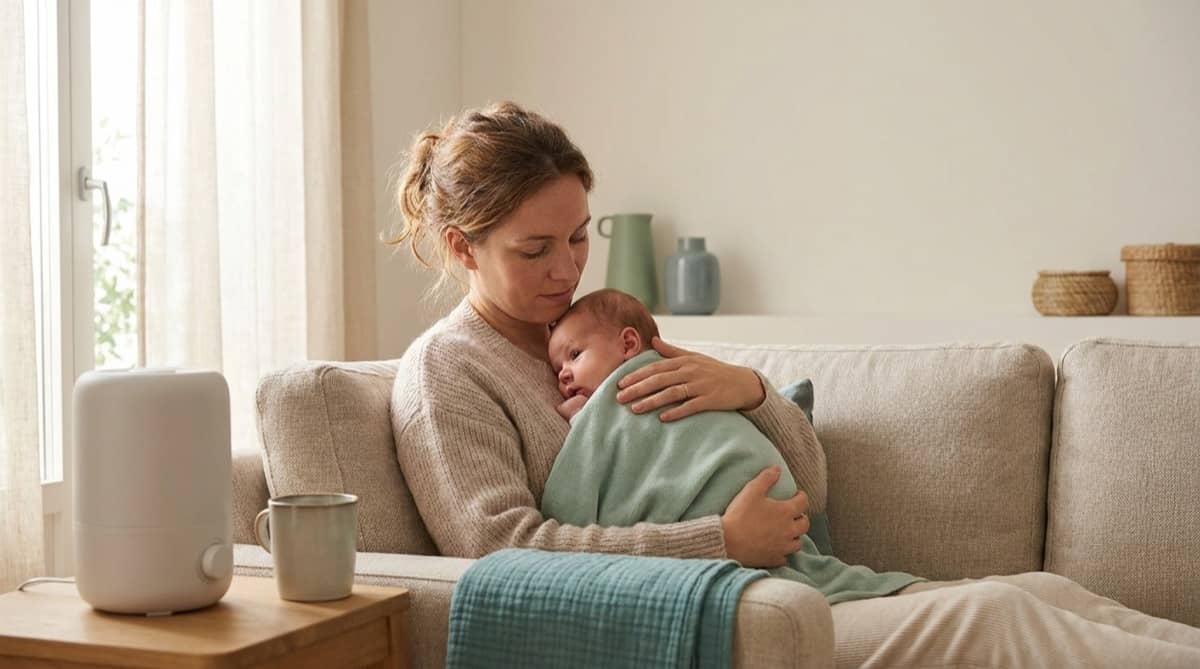
A congested, snuffly baby is stressful — especially when they struggle to feed or sleep through it — and the medicine aisle is no help, because cold medicines aren’t safe for little ones. The good news is that simple, safe tools work well. This guide covers how to clear congestion, why some snuffliness is normal, what never to give, and the breathing signs that need a doctor.
Safe ways to clear congestion
The reliable trio is saline, suction, and humidified air. Place a few saline drops in each nostril to thin the mucus, wait a moment, then gently suction with a bulb syringe or nasal aspirator — most useful right before feeds and sleep, when a clear nose matters most. A cool-mist humidifier adds moisture to dry air, and keeping feeds frequent keeps your baby hydrated, which thins secretions naturally.
Why some congestion is normal
Newborns breathe mainly through their noses and have very narrow nasal passages, so they frequently sound congested even when perfectly well — you may hear snorts, snuffles, and rattly breathing. This "newborn nasal congestion" is usually harmless as long as your baby is feeding, sleeping, and breathing comfortably, and it tends to ease over the first weeks. Saline and gentle suction are still your friends.
What never to give
Do not give over-the-counter cough or cold medicines to children under four — the FDA and AAP warn they don’t work in young children and can cause serious harm. Skip decongestant drops, "baby" cold syrups, and rubs not approved for infants. The safe toolkit is saline, suction, humidity, hydration, and time. For fever or discomfort in babies old enough, ask your pediatrician about the correct pain reliever and dose.
Helping a congested baby feed and sleep
Congestion hits hardest at feeds and bedtime. Suction with saline a few minutes before nursing or a bottle so your baby can breathe while eating, and offer smaller, more frequent feeds if needed. For sleep, suction beforehand and run a humidifier — but keep safe sleep intact: on the back, on a firm flat surface, with nothing in the bed. Never prop the mattress, use positioners, or let a congested baby sleep in a swing or car seat.
When to call the pediatrician
Some signs override "wait and see." Call right away for any fever in a baby under three months. Seek care for fast or labored breathing — flaring nostrils, ribs or chest pulling in, grunting, or a bluish tinge around the lips — as well as refusal to feed, signs of dehydration, congestion lasting beyond one to two weeks, or a baby who simply seems to be working hard to breathe. These can signal a respiratory infection like RSV that needs evaluation.
The bottom line
Relieve baby congestion safely with saline drops, gentle bulb-syringe or aspirator suction (before feeds and sleep), a cool-mist humidifier, and frequent feeds — never OTC cold medicine under age 4. Some newborn snuffliness is normal, but call your pediatrician for any fever under 3 months, labored or fast breathing, poor feeding, or congestion that drags on.
Was this article helpful?
Frequently asked questions
How do I relieve my baby’s congestion?
Put a few saline (saltwater) drops in each nostril to loosen mucus, wait a moment, then gently suction with a bulb syringe or nasal aspirator — most helpful right before feeding and sleep. Run a cool-mist humidifier, keep feeds frequent for hydration, and hold your baby a bit more upright. Avoid all OTC cold medicines under age 4.
Is some baby congestion normal?
Yes. Newborns are obligate nose-breathers with tiny nasal passages, so they often sound snuffly even without being sick — sometimes called "newborn nasal congestion." It’s usually harmless if your baby is feeding, sleeping, and breathing comfortably. Saline and gentle suction help, and it typically resolves on its own.
Can I give my baby cold medicine?
No. The FDA and AAP advise against over-the-counter cough and cold medicines for children under 4 (and using caution well beyond that) because they’re ineffective for young children and can cause serious side effects. Stick to saline, suction, humidified air, and hydration.
When should I worry about baby congestion?
Call your pediatrician for any fever in a baby under 3 months, fast or labored breathing (flaring nostrils, ribs pulling in, grunting), bluish color around the lips, refusal to feed or signs of dehydration, congestion lasting more than 1–2 weeks, or a baby who seems to be working hard to breathe. Trust your instincts.
How do I help a congested baby sleep?
Suction the nose with saline before bed, run a cool-mist humidifier in the room, and keep up regular feeds for hydration. Do not prop up the mattress or use positioners, and never add pillows or let baby sleep in a swing or car seat — safe sleep still applies: on the back, flat, and bare.
References
- 1.Nasal Congestion in Babies — American Academy of Pediatrics (HealthyChildren.org)
- 2.Coughs and Colds: Medicines or Home Remedies? — American Academy of Pediatrics (HealthyChildren.org)