How to Bathe a Newborn
Sponge baths, tub baths, and keeping baby safe and warm.
By Dana Reyes · CPST-certified car seat & safety editor
Updated June 11, 2026
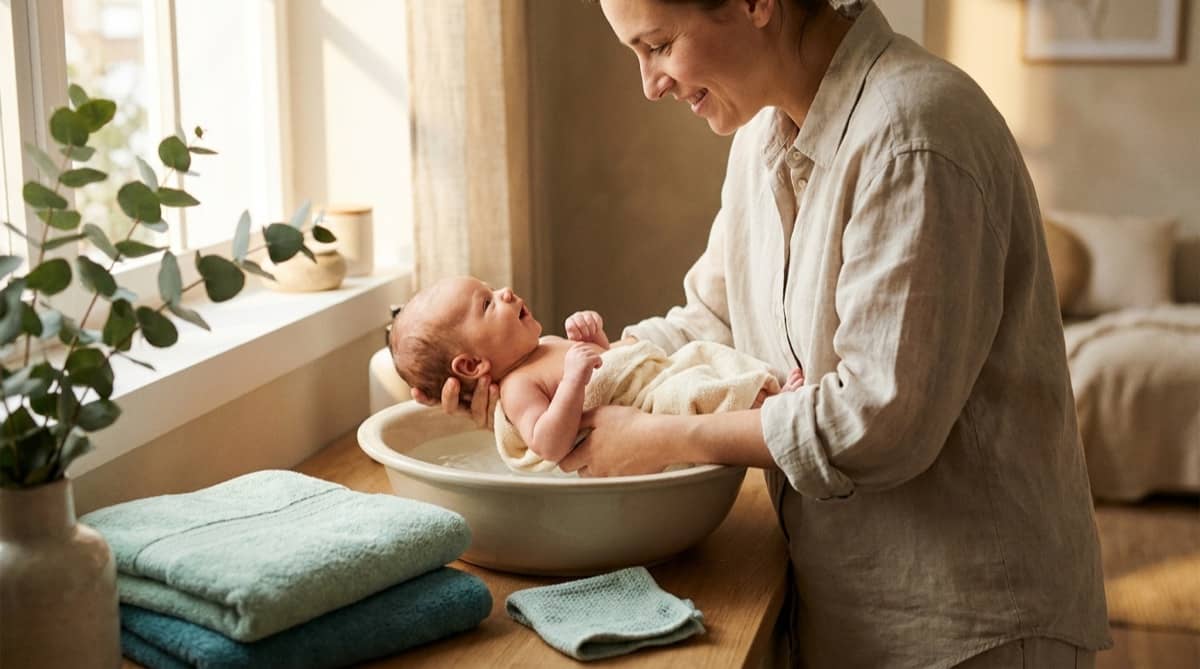
Bath time can be one of the sweetest parts of the day — or, for a nervous new parent holding a slippery newborn, one of the most intimidating. The reassuring truth is that babies need bathing far less often than people assume, and a few safety habits make it simple and secure. This guide covers sponge baths, the move to tub baths, water safety, and how to keep delicate skin healthy.
Start with sponge baths
Until the umbilical cord stump falls off and heals (and any circumcision heals), give sponge baths only to keep those areas dry. Lay your baby on a warm, padded surface, keep them wrapped and expose only the part you’re washing to prevent chilling, and wipe gently with a damp, warm cloth — face and scalp first with plain water, then body, saving the diaper area for last.
How often to bathe
Two to three baths a week is plenty for a baby. Newborns simply don’t get dirty enough to need daily baths, and over-bathing strips the skin’s natural oils and can worsen dryness or eczema. In between, "top and tail" — cleaning the face, neck creases, hands, and diaper area daily — covers what actually needs regular cleaning.
Moving to tub baths
Once the cord has healed, you can graduate to a baby tub or clean basin. Fill it with just a few inches of warm water (around 100°F / 38°C), tested on your wrist or elbow. Support your baby’s head and neck with one arm the entire time, wash from cleanest to dirtiest areas, and keep the experience short and warm. Many babies find warm water soothing, making bath a nice part of a bedtime routine.
Water safety: the non-negotiable rule
Never leave a baby alone in or near water — not for a phone call, not for a doorbell, not for a sibling, not for a second. Drowning is silent and can happen in less than an inch of water in moments. Gather everything you need before you start, keep a hand on your baby at all times, set your water heater to 120°F (49°C) or lower to prevent scalds, and if you must leave the room, wrap the baby up and take them with you.
Caring for baby skin
Newborn skin is delicate and prone to dryness. Use lukewarm (not hot) water, a gentle fragrance-free cleanser only if needed (plain water is fine early on), and pat — don’t rub — dry, paying attention to skin folds. Moisturize with a fragrance-free baby lotion if the skin is dry. Avoid powders (inhalation risk) and adult products. For persistent rashes, cradle cap, or eczema, ask your pediatrician.
Making bath time calm
Warm the room, keep the water and your hands warm, talk or sing softly, and move with calm confidence — babies pick up on tension. A consistent, gentle bath can become a powerful sleep cue as part of an evening wind-down. If your baby hates baths at first, keep sessions short and reassuring; most come around with time.
The bottom line
Sponge-bathe until the cord heals, then bathe two to three times a week in a few inches of warm (~100°F) water, supporting the head and gathering supplies first. Above all, never leave your baby unattended near water. Bathe gently and infrequently to protect delicate skin, and let bath time become a soothing part of your routine.
Was this article helpful?
Frequently asked questions
How often should I bathe my newborn?
Two to three times a week is enough for most babies. Newborns don’t get very dirty, and frequent bathing can dry out their delicate skin. Daily "top and tail" cleaning of the face, neck folds, hands, and diaper area handles the parts that actually need regular attention.
When can I give my baby a real bath instead of sponge baths?
Wait until the umbilical cord stump has fallen off and healed (usually 1–3 weeks), and for circumcised babies, until that has healed too. Until then, stick to sponge baths to keep those areas dry. After healing, you can move to a baby tub or basin.
What temperature should the bath water be?
Aim for warm, around 100°F (38°C) — comfortably warm on the inside of your wrist or elbow, never hot. Set your water heater to 120°F (49°C) or lower to prevent scald risk, fill with only a few inches of water, and always test before placing your baby in.
How do I keep my baby safe during bath time?
Never leave a baby alone in or near water, even for a moment — drowning can happen silently in seconds and in very little water. Gather all supplies before you start, keep one hand on the baby at all times, support the head and neck, and use a non-slip surface. If you must answer the door or phone, take the baby with you.
What products do I need to bathe a baby?
Very little: a baby tub or basin, a few soft washcloths, a hooded towel, and a small amount of fragrance-free, tear-free baby wash if you use any (plain water is fine for newborns). Skip adult soaps and heavily fragranced products on delicate newborn skin.
References
- 1.Bathing Your Baby — American Academy of Pediatrics (HealthyChildren.org)
- 2.Bath Safety — American Academy of Pediatrics (HealthyChildren.org)