How to Install a Car Seat Correctly
A CPST walks through the most common install mistakes — and how to avoid them.
By Dana Reyes · CPST-certified car seat & safety editor
Updated June 11, 2026
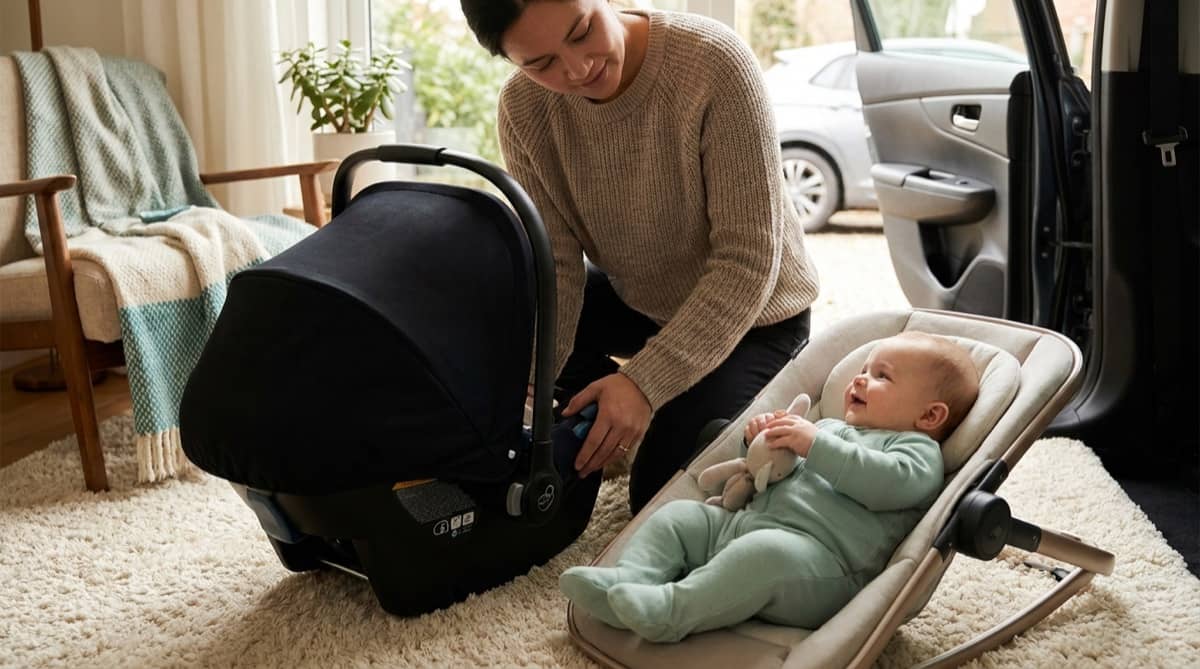
A correctly installed car seat is the single most effective way to protect your child in a vehicle — but national inspections consistently find that about half of seats are installed or used incorrectly. The good news: nearly every mistake comes down to a handful of fixable issues. This guide, reviewed against AAP and NHTSA guidance, walks through installing rear-facing and forward-facing seats correctly, the tests that prove it is right, and the errors that quietly undermine an otherwise good seat.
How tight does a car seat need to be?
The standard is simple and measurable. Once installed, grasp the car seat at the belt path — the slot where the seatbelt or lower anchors pass through the seat — and pull firmly side-to-side and front-to-back. The seat should not move more than one inch in any direction. Wiggle at the top of the seat is normal and is not what you measure. If it moves more than an inch at the belt path, the install is too loose: put your weight into the seat while you tighten the belt or lower-anchor strap, then re-check.
Rear-facing installation, step by step
Rear-facing is the safest orientation because it cradles a child’s head, neck, and spine in a crash. Place the seat in the back, set the recline angle within the range marked on the seat (a too-upright seat lets a newborn’s head flop forward; a too-reclined seat reduces crash protection). Route the seatbelt or lower anchors through the rear-facing belt path, buckle, and remove slack by pressing down with your body weight as you pull the belt tight. Confirm the recline indicator reads correctly for your child’s age, then run the inch test at the belt path.
Forward-facing installation, step by step
Only switch to forward-facing after your child has outgrown the rear-facing limits of a convertible seat. Forward-facing adds a critical part: the top tether. Route the harness through the forward-facing belt path, install with the seatbelt or lower anchors, tighten to under one inch of movement, then attach the top tether to the vehicle’s tether anchor and tighten it. The tether dramatically reduces how far a child’s head moves forward in a crash, yet it is one of the most commonly skipped steps.
LATCH or seatbelt — which should I use?
Both are equally safe when installed correctly; choose whichever gives you a tighter, easier install in your specific vehicle and seat. Do not use lower anchors and the seatbelt together unless your manual explicitly permits it. Also note the lower-anchor weight limit: once your child plus the seat weighs about 65 pounds, you must switch from lower anchors to the seatbelt (check the sticker on your seat for the exact figure). The top tether is used for forward-facing regardless of which method you choose.
Getting the harness right
Even a perfectly installed seat fails if the harness is loose. For rear-facing, the harness straps come from at or below the shoulders; for forward-facing, at or above. After buckling, do the pinch test at the collarbone: if you can pinch a horizontal fold of webbing, tighten until you cannot. The chest clip belongs at armpit level — too low and it can cause abdominal injury, too high and it can sit on the throat. Remove bulky coats before buckling; put blankets over the harness, never under it.
Common mistakes that quietly undermine safety
The usual offenders: a loose install (more than an inch of movement), a loose harness (failing the pinch test), the chest clip too low, switching to forward-facing too early, skipping the top tether, adding non-regulated aftermarket products (strap covers, head supports) that did not come with the seat, and reusing a seat with unknown crash history or past its expiration date. Each is easy to miss and easy to fix once you know to look.
When to get a professional check
Because roughly half of seats are misused, a free inspection by a certified Child Passenger Safety Technician (CPST) is one of the highest-value 20 minutes in new parenthood. They will not just fix the install — they teach you to do it yourself for the next vehicle or the next stage. Find one through NHTSA’s station locator or safekids.org.
The bottom line
Tight at the belt path (under one inch), snug at the harness (pinch test), rear-facing as long as the seat allows, and the top tether attached for forward-facing. Nail those four and you have addressed the overwhelming majority of car-seat risk. When in doubt, get a free CPST check — it is the fastest path to certainty.
Was this article helpful?
Frequently asked questions
How tight should a car seat be installed?
Grab the seat at the belt path (where the belt or lower anchors pass through) and pull side-to-side and front-to-back. A correct install moves less than 1 inch in any direction. Movement near the top of the seat is normal and not what you measure.
Can I use the seatbelt and LATCH at the same time?
No — unless your car seat manual explicitly allows it (most do not). Pick one: lower anchors (LATCH) or the seatbelt. Both, when correctly installed, are equally safe.
When should my child stop riding rear-facing?
Keep your child rear-facing as long as possible — until they reach the maximum height or weight allowed by your convertible seat, which for many seats is age 4 or beyond. The AAP no longer ties the switch to a specific age; rear-facing is safest for the head, neck, and spine.
Is it safe to buy a used car seat?
Only if you know its full history: it has never been in a moderate or severe crash, is not past its expiration date (usually 6–10 years from manufacture), has all parts and the original manual, and is not under recall. If you cannot verify all of these, do not use it.
How do I know if the harness is tight enough?
Do the pinch test: after buckling, try to pinch the harness webbing at the collarbone. If you can pinch a fold, it is too loose. The chest clip should sit level with the armpits.
Where can I get my car seat checked for free?
Certified Child Passenger Safety Technicians offer free inspections. Find one through NHTSA’s inspection-station locator or safekids.org. Roughly half of car seats are installed incorrectly, so a check is worthwhile even if you are confident.
Gear for this stage
$499–$550
$199–$250
References
- 1.Car Seats: Information for Families — American Academy of Pediatrics (HealthyChildren.org)
- 2.Car Seats & Booster Seats — NHTSA
- 3.Find a Car Seat Inspection Station — NHTSA